
There is no clean answer to how long subdivision takes in NSW. Anyone giving you a specific number is guessing. Every subdivision has different ground, different authorities involved, different conditions, and different surprises waiting. What you can control is how the back end of the program is run. That is what this article is about.
Why nobody can give you a clean subdivision timeframe in NSW
There is no clean answer to how long subdivision takes in NSW. Anyone giving you a specific number is guessing. Every subdivision has different ground, different authorities involved, different conditions, and different surprises waiting. What you can control is how the back end of the program is run. That is what this article is about.
1. Every site is different
Contamination, rock, unexpected underground services, heritage findings, easements, ecology, flooding, bushfire asset protection zones, road reserve issues. Any one of these can add weeks or months to a program, and you often do not find out until works are already underway.
2. Authorities move on their own timelines
Sydney Water, Water NSW, Hunter Water, electricity distributors, telco providers, Transport for NSW, and the local roads authority all run their own queues. You can chase them. You cannot speed them up.
3. Council DA times are not subdivision-specific
Published council DA determination times are averaged across all DA types. That includes alterations and additions, swimming pools, garages, change-of-use applications, and so on. They are not a subdivision benchmark, and applying them to your project will mislead.
So rather than chase a number, the more useful question is: what can you actually do to keep your program tight?
What really blows out subdivision programs in NSW
These are the real-world issues we see on subdivision projects. Plenty of them do not show up in the initial feasibility. They surface once works are underway, which is exactly when they are hardest and most expensive to deal with.
Unforeseen site conditions
- Contamination discovered during ground disturbance, even after preliminary site investigation. Published guidance notes that unexpected contamination regularly triggers stop-work directions and additional consent conditions.
- Hard rock layers encountered during excavation, requiring different plant or methodology.
- Naturally occurring asbestos in soil or rock, which is a known risk across parts of eastern Australia.
- Acid sulphate soils, particularly in coastal areas.
- Unstable soil and groundwater issues.
Underground utility surprises
- Services found in positions that do not match Before You Dig Australia (formerly Dial Before You Dig) plans.
- Undocumented live services crossing the site.
- Utility strikes that trigger stop-work.
- Required relocation of gas mains, high-voltage electrical, water, or sewer infrastructure.
- Redesign and re-approval cycles when services are found in unexpected positions.
Heritage and ecology
- Aboriginal cultural heritage items discovered late, triggering an ACH assessment and additional conditions.
- Threatened species, scarred trees, or endangered ecological communities requiring offsets or additional approvals.
Environmental and bushfire constraints
- Bushfire Prone Land requirements, including Asset Protection Zones under Planning for Bush Fire Protection 2019.
- Riparian and watercourse buffers requiring sign-off from the Natural Resources Access Regulator.
- Flood and stormwater issues identified in detailed design, not at concept.
Authority and utility delays
- Sydney Water Section 73, including Water Servicing Coordinator queues and downstream requirements.
- Non-Sydney areas serviced by Water NSW, Hunter Water, or council-run utilities, each with their own process.
- Ausgrid, Endeavour Energy, or Essential Energy sign-offs for electrical connections.
- NBN or telco infrastructure provisioning.
- Transport for NSW referrals for works affecting classified roads.
- Council roads authority sign-offs for internal roads, kerb and gutter, and stormwater.
Easements and title issues
- Easements discovered in detailed survey that affect the proposed layout.
- Unclear easement boundaries needing investigation or legal input.
- Neighbour access or use disputes.
- 88B instrument drafting that takes longer than expected, particularly where complex covenants are involved.
Ambiguous or unreasonable conditions of consent
- Ambiguous conditions that need interpretation before works can be closed out.
- Conditions that are impractical, not applicable, or assume a use you did not propose.
- Conditions that effectively require a modification application under Section 4.55 of the EP&A Act to resolve.
Council DA delays for unknown reasons
Staff turnover, an internal engineer referral, a neighbour submission, a new overlay being applied, or simple backlog. Sometimes you never find out why a DA sat for two months.
None of these are exotic. They happen regularly. They are the reason no certifier can hand you a calendar date for new titles.
What you can control on a NSW DA subdivision
For a DA subdivision with civil works, most of the levers are in the back end of the program, after consent is granted. The earlier you think about them, the better.
Before you lodge the DA
- Get a solid team. A clean, well-packaged DA from a good surveyor, civil engineer, town planner (where needed), and with early certifier input moves faster and attracts cleaner conditions.
- Do your pre-lodgement site work properly. Contamination, flood, bushfire, ecology, and heritage issues are cheaper and faster to handle pre-DA than post-DA.
Once you have consent
- Engage a Subdivision Certifier early for the Subdivision Works Certificate, not when works are about to start. The earlier the certifier is across the conditions, the fewer surprises later.
- Workshop the conditions. Go through them line by line. Understand exactly what is required and what the evidence needs to look like before you start.
- Challenge ambiguous or unreasonable conditions early, in writing, with council. Do not wait until you are trying to close out the Subdivision Certificate application. If a Section 4.55 modification is needed, get it moving.
- Execute works correctly the first time. Keep evidence as you go: photos, supervising engineer certificates, test results, compaction reports, commissioning documentation.
- Run Sydney Water Section 73, electricity, telco, and road authority clearances in parallel. Do not sequence them one after the other if you do not have to.
- Package the Subdivision Certificate application tightly. Missing documents are the single most common cause of avoidable delay at the final stage.
What you can control on a NSW CDC subdivision
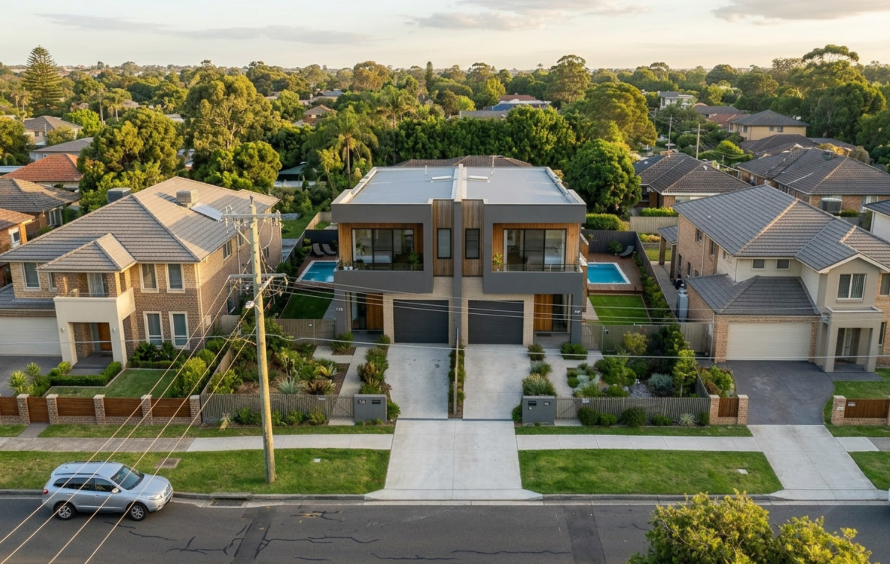
For a CDC duplex or dual occupancy, the big moves are different. The build is usually the long pole. The subdivision should be running quietly in the background the whole time, not bolted on at the end.
Run the subdivision CDC in parallel with the building CDC
Apply for the subdivision CDC at the same time as the building CDC. Not after the build is done. Many developers leave the subdivision CDC until the end and lose months unnecessarily.
Keep subdivision items moving during the build
While the build is underway, keep the subdivision-side items moving in the background: Section 73 application, survey, draft plan of subdivision or strata, and 88B instrument can all be progressed well before Occupation Certificate.
Line up the Strata Certificate to follow OC immediately
By the time the OC is issued, the Strata Certificate or Subdivision Certificate should be the last tick on the list, not the start of a new project. Keep the certifier in the loop through construction. If something on site changes, they can flag it before it becomes a problem at final sign-off.
The single biggest mistake we see on duplex and dual occupancy projects is treating the subdivision as a post-OC afterthought. Done properly, it is a parallel workstream that closes out days after OC, not months later.
Example scenarios (rough guides only, not promises)
These are composites, not real projects or quotes. Every site is different.
- A built duplex with the subdivision CDC already issued, Section 73 lodged during construction, and survey and 88B ready at OC. The Strata Certificate and registration can move quickly once OC is issued.
- A DA subdivision with moderate civil works, clean conditions, and no contamination or utility surprises. Program driven mostly by works and authority sign-offs, not paperwork.
- A DA subdivision where contamination is discovered during earthworks and a utility relocation is required. Several months of added time, and often additional conditions applied through a modification.
None of these come with firm month figures. That is deliberate. Run those scenarios against your own site with an engineer, certifier, and surveyor, and you will get something realistic. Run them against a blog article and you will get a guess.
Frequently asked questions
Why can't a Certifier give me an exact subdivision timeframe?
Because every site is different and too many of the variables sit outside the Certifier’s control. Authority sign-offs, site surprises, Council workload, and condition interpretation all move on their own clock. A Certifier can give you a realistic range once they have seen the consent, the site, and the conditions. A number before that is a guess.
What is the single biggest thing I can do to speed up my subdivision?
Engage a subdivision certifier early. Ideally as soon as consent is issued, before works start. The earlier a certifier can workshop the conditions with you, flag problems, and help sequence the works and authority approvals, the less time you lose at the back end.
Should I apply for the subdivision CDC at the same time as the building CDC?
Yes. For a duplex or dual occupancy, running the subdivision CDC in parallel with the building CDC is the cleanest way to avoid losing months at the end. The subdivision requirements can then be worked through during construction, so OC and the Strata Certificate line up neatly.
What surprises most often delay subdivisions during construction?
Contamination found during ground disturbance, hard rock, undocumented underground utilities, utility relocations, Aboriginal cultural heritage findings, and delays with Sydney Water or the electricity authority. Most of these are not visible at feasibility and only surface once works start.
Summary and next step
Subdivision timelines in NSW cannot be pinned down to a single number. Every site has its own landmines. What you can do is run the back end of the program properly: engage a certifier early, workshop the conditions before works start, challenge unclear conditions with council in writing, run authority sign-offs in parallel, and for CDC projects, keep the subdivision on the build’s critical path rather than bolted on at the end.
If you are planning a subdivision in NSW and want practical advice on how to shape the back end of your program, Southwell Certifiers can help. To discuss your project and receive a no-obligation fee proposal, contact us on (02) 8734 5676, email admin@southwellcert.com.au, or request a fee proposal.