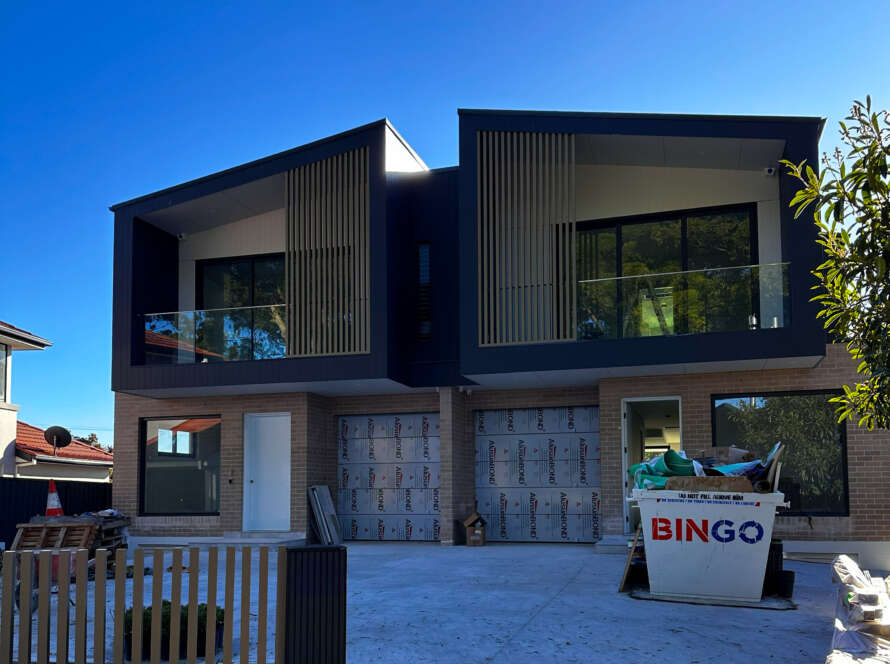

A duplex in Zone R2 can now be approved as complying development under the Low Rise Housing Diversity Code even where the council LEP does not permit dual occupancy. Codes SEPP clause 1.19(3B), which forced those sites to a development application, was repealed on 12 December 2025.
The permission itself is not new. What is new is the route.
What changed on 12 December 2025
State Environmental Planning Policy (Housing) 2021, section 166, permits dual occupancies and semi-detached dwellings with consent in Zone R2 across the State. That has been in place since the low and mid rise reforms. Councils could not switch it off through their LEP.
But State Environmental Planning Policy (Exempt and Complying Development Codes) 2008 held a second gate. Clause 1.19(3B) removed the Complying Development Certificate pathway for a dual occupancy in R2 where the Housing SEPP was the only thing making it permissible. If your council LEP did not list dual occupancy in the R2 land use table, you had the right to build one and no way to get it approved except through council.
That clause was omitted by Ballina Local Environmental Plan 2012 (Amendment No 58), Schedule 2, published on the NSW legislation website on 12 December 2025 (2025 No 684). Schedule 2 reads in full: “Clause 1.19 Land on which complying development may not be carried out. Omit clause 1.19(3B).”
A local plan named after one North Coast council carried a statewide change. That is why it did not land loudly, and why advice written before December is still circulating. In the Codes SEPP consolidation current for 8 July 2026, clause 1.19(3B) reads “(Repealed)”.
The practical effect is a timeline. On 11 December those sites went to council. On 12 December they did not.
Does the Low Rise Housing Diversity Code apply to your site
Permissibility comes first, and there are two routes to it. Check them in this order, because the order changes the answer.
Route 1: the LEP permits dual occupancy in R2
Open the council LEP land use table for Zone R2 and check whether dual occupancy is permitted with consent. Then check the minimum lot size, which sits on the Lot Size Map or in a dedicated clause.
If the LEP permits it and your lot meets the LEP minimum, you do not need to check the Housing SEPP for permissibility. Move through to the code standards.
This is the cleaner route, and it is why you check it first.
Route 2: the Housing SEPP permits it
If the LEP does not permit dual occupancy in R2, section 166 of the Housing SEPP carries you, but only on land to which Chapter 6 applies. That is section 164, and it is a long list of exclusions. Any one of them shuts route 2:
- Bush fire prone land
- A coastal vulnerability area, or a coastal wetlands and littoral rainforests area
- Land to which Chapter 5 applies
- Land that is a heritage item, or on which a heritage item is located
- Four whole local government areas: Bathurst Regional, City of Blue Mountains, City of Hawkesbury and Wollondilly
- Land mapped as Probable Maximum Flood in the Hawkesbury-Nepean River Flood Study
- Georges River Catchment land susceptible to the probable maximum flood in Canterbury-Bankstown, Cumberland, City of Fairfield, Georges River, City of Liverpool or Sutherland Shire
- A flood planning area in 23 named LGAs, including Ballina, Byron, City of Newcastle, City of Lismore, City of Shoalhaven, Tweed and Port Stephens
- An ANEF contour of 25 or greater, or an ANEC contour of 20 or greater
- Land within 200m of a relevant pipeline
- Land within 800m of a public entrance to a station listed in Schedule 12
- An Accelerated TOD Precinct
- An exclusion area on the Low and Mid Rise Housing Exclusion Map
These are exclusions, not conditions. You do not comply your way past them. That list is more stringent than most council LEPs, which is exactly why you do not start here.
Watch the two 800m rules. Section 164(1)(k) excludes land within 800m of a station listed in Schedule 12. The separate “low and mid rise housing area” definition in section 163 uses Schedule 11 and works in your favour, not against you. Different schedules, opposite effects, and they are routinely confused. We have covered the walking distance measurement separately in the LMR 800m walking distance rule.
Ballina, the worked example
The same amendment gave Ballina its own controls. New clause 4.1CA sets a minimum lot size for dual occupancies in Zone R2 of 450m2 attached and 600m2 detached. New clause 4.1CB allows subdivision of a lot carrying an existing, lawfully erected dual occupancy where each resulting lot meets the Lot Size Map minimum and holds one dwelling, with any access handle excluded from the area.
Ballina also sits on the section 164 flood planning area list. On a flood affected Ballina site, route 2 is closed and route 1 is the only way through. That is this whole article in one LGA: check the LEP first, because it can carry you where the state policy cannot.
What still stops a dual occupancy CDC
The repeal of 1.19(3B) did not make the pathway universal. These still bite:
Clause 1.19(3A). Development under the Low Rise Housing Diversity Code or the Pattern Book Development Code is not complying development on land holding a heritage item or a draft heritage item. Untouched by the amendment.
Clause 1.19(1). Heritage conservation areas, land reserved for a public purpose, Class 1 and 2 acid sulfate soils, significantly contaminated land, biobanking and private land conservation agreements, buffer and river front areas, environmentally sensitive land, coastal and coastal erosion hazards, foreshore areas, the 25 ANEF contour and above, Water NSW special areas, and unsewered land in a drinking water catchment above set thresholds.
Clause 1.19A. This one is narrower than most people assume. It bars complying development on land in bush fire attack level 40 or the flame zone, not on bush fire prone land generally. A BAL-12.5 or BAL-19 site is not excluded by this clause. Where the mapping is marginal, a council or an RFS-recognised bush fire consultant can determine the level using the Planning for Bush Fire Protection methodology.
Note the interaction: bush fire prone land is a flat exclusion under Housing SEPP section 164(1)(a), so it closes route 2 entirely. Under route 1 it does not, and only BAL-40 and the flame zone stop you.
The standards you have to build to
Permissibility gets you to the starting line. The Low Rise Housing Diversity Code standards decide the rest, and they are not the same numbers as the Housing SEPP non-discretionary standards that apply to a DA.
| Control | CDC, Codes SEPP cl 3B.8 to 3B.10 | DA, Housing SEPP s 168 |
|---|---|---|
| Minimum parent lot | The greater of 400m2 or the LEP minimum for dual occupancies | 450m2 |
| Minimum lot width at building line | 15m, or 12m where parking is off a secondary road, parallel road or lane | 12m |
| Maximum building height | 8.5m above existing ground level | 9.5m |
| Maximum gross floor area | 25% of lot area plus 300m2 for lots of 400m2 to 2,000m2 | FSR 0.65:1 |
Clause 3B.8(1) is worth reading closely. It sets the parent lot at the greater of 400m2 or the minimum specified in the applicable environmental planning instrument, and it expressly excludes Housing SEPP Chapter 6, Part 2, Division 2 from that comparison. So the 450m2 in section 168 does not set the CDC minimum. The LEP does, or 400m2 where the LEP is silent.
That single carve-out decides a lot of marginal sites, in both directions.
Can you split it and sell two titles
For anyone building to sell, the pathway question is really a subdivision question. Where the build is a CDC under the Low Rise Housing Diversity Code, the two lot Torrens subdivision usually follows the same pathway. Where the build is locked into a DA, the subdivision generally follows it through council.
Housing SEPP section 169 sets non-discretionary standards for subdividing a dual occupancy in a low and mid rise housing area in Zone R1, R2 or R3. Each resulting lot must hold no more than one dwelling, be at least 6m wide at the front building line, have lawful access and frontage to a public road, be at least 225m2, and not be a battle-axe lot. Section 169 applies only where consent for the dual occupancy was granted on or after 28 February 2025, or the development results from a DA made on or after that date. It does not apply to strata subdivision.
In almost every case where the CDC route turns out not to be available, the constraint was never clause 1.19(3B). It is lot geometry, a heritage listing, or flood mapping nobody had checked. For the practical detail, see how to subdivide a duplex under CDC in NSW and dual occupancy subdivision lot size rules. The NSW Pattern Book route runs on the same permissibility test.
What to do next
Run the test in order. Check the LEP land use table for R2 and the lot size minimum. If the LEP permits it, you are clear of the section 164 list entirely. If it does not, work section 164 before you draw anything, because bush fire prone land, a heritage item or a flood planning area will end route 2 on their own. Then check the site against clause 3B.8, and only then start design.
If you want a straight answer on whether the CDC route is open on a specific site, we will tell you before you spend money on drawings.
Frequently asked questions
Can I get a CDC for a duplex in Zone R2 if my council LEP does not allow dual occupancy?
Yes, since 12 December 2025. Section 166 of the Housing SEPP permits dual occupancies in Zone R2 with consent, and the repeal of Codes SEPP clause 1.19(3B) removed the bar on using the complying development pathway for those sites. The land still has to clear the Housing SEPP section 164 exclusions and meet the code standards.
What are the requirements for a dual occupancy CDC in NSW?
The use must be permissible, either under the council LEP or under Housing SEPP section 166. The land must not be caught by Codes SEPP clause 1.19(1), 1.19(3A) or 1.19A. The parent lot must be the greater of 400m2 or the LEP minimum, at least 15m wide at the building line, or 12m with rear or side lane parking. Height is capped at 8.5m.
Does the low and mid rise housing policy override the LEP?
For permissibility in Zone R2, yes. Housing SEPP section 166 permits dual occupancies with consent whether or not the LEP land use table lists them. It does not override the LEP everywhere, and it does not apply on land excluded by section 164.
Has clause 1.19(3B) of the Codes SEPP been repealed?
Yes. It was omitted by Ballina Local Environmental Plan 2012 (Amendment No 58), Schedule 2, published 12 December 2025 (2025 No 684). The Codes SEPP consolidation current for 8 July 2026 shows clause 1.19(3B) as “(Repealed)”. Advice saying the clause still blocks a dual occupancy CDC in Zone R2 is out of date.
Can you have two houses on one title under this code?
A dual occupancy is two dwellings on one lot, so yes, before subdivision. Whether you can then split it into two Torrens titles depends on the subdivision standards. Housing SEPP section 169 requires each resulting lot to be at least 225m2, at least 6m wide at the front building line, hold one dwelling, and have lawful road access.
Does the repeal apply to the Pattern Book Development Code too?
Yes. Clause 1.19(3B) applied to both the Low Rise Housing Diversity Code and the Pattern Book Development Code, so the repeal opens both. Clause 1.19(3A) still excludes land holding a heritage item or draft heritage item under either code.
The bottom line
Clause 1.19(3B) is gone. From 12 December 2025 a duplex in Zone R2 can be a CDC under the Low Rise Housing Diversity Code wherever the use is permissible and the code is met, including where the council LEP does not permit dual occupancy at all.
The test is short. Check the LEP first. If it permits dual occupancy in R2 and your lot meets the minimum, you are clear of the Housing SEPP exclusions. If it does not, section 166 can carry you, but only where section 164 does not catch the land. Then work clause 3B.8 and the rest of the code.
If you are planning a duplex or a dual occupancy subdivision in NSW and want to know whether CDC is available on your site, Southwell Certifiers can help. Most certificates are issued or answered with exactly what is outstanding within one to two business days. Call (02) 8734 5676, email admin@southwellcert.com.au, or request a fee proposal.
About the author
Written by Dean Dehghan-Khalaji, CPEng, Registered Certifier BDC05320, NER listed, AAC member. Dean is the principal certifier at Southwell Certifiers, specialising in subdivision and strata certification across NSW. Before private practice he spent fifteen years in local government at Penrith and Blacktown councils.