
The NSW Housing Pattern Book is a set of pre-approved housing designs. Low-rise patterns can be approved by a Complying Development Certificate (CDC) in 10 days. Mid-rise patterns use a streamlined Development Application (DA). Subdivision and strata can be approved alongside the build or after, by a Registered Subdivision and Strata Certifier.
This guide explains the NSW Pattern Book like you are 10 years old. It walks through the approval process, eligibility, controls, what falls back to the LEP, and where Torrens or strata title can be approved by a private subdivision and strata certifier in NSW.
What is the NSW Pattern Book?
Think of the NSW Housing Pattern Book as a small library of house designs that the NSW Government has already ticked off. Eight designs have been endorsed by the NSW Government Architect. The NSW Pattern Book designs cover dual occupancy, terraces, townhouses and manor houses for the low-rise patterns, plus mid-rise patterns for apartment style buildings.
The aim is simple. Pre-approved designs cut design risk, cut assessment time, and get homes built faster.
The Pattern Book commenced on 30 July 2025. Patterns are available for $1 until 31 January 2026, then moved to $1,000 each. The mechanism behind it is the new Pattern Book Development Code 2025, which was inserted as Part 3BA of the Codes SEPP, plus a new Chapter 7 in the Housing SEPP 2021 for mid-rise.
Eligible patterns generally apply in residential zones R1, R2, R3 and R4 where the relevant development type is permissible under the LEP or the Housing SEPP. Always check the specific pattern and your zone before relying on the pathway.
How does Pattern Book approval work in NSW?
There are two pathways. Which one you use depends on the scale of the building.
Low-rise patterns: the CDC pathway
If your project uses a low-rise pattern (dual occupancy, terrace, townhouse, manor house), it goes down the Complying Development Certificate pathway under the Pattern Book Development Code 2025. A CDC is a combined planning and construction approval issued by either council or a private registered certifier.
The headline number is 10 days for the determination, with 7 days notice to neighbours before approval can be issued. That is faster than a standard CDC, which typically runs to 20 days with 14 days neighbour notification.
Mid-rise patterns: the streamlined DA pathway
If your project uses a mid-rise pattern, it does not go through CDC. It goes through a streamlined DA under Chapter 7 of the Housing SEPP 2021. Council remains the consent authority, but because the pattern is pre-endorsed by the Government Architect, council does not reassess the design issues already locked in by the pattern. The applicant lodges a design verification statement confirming the design matches the pattern.
So to answer the common question directly: council does not approve a DA for a low-rise pattern. Low-rise is CDC, and council or a private certifier can issue it. Mid-rise is a streamlined DA, and council issues that.
Pattern Book CDC vs traditional CDC
A traditional CDC under the Housing Code or Low Rise Housing Diversity Code typically takes 20 days to determine, with 14 days neighbour notification. A Pattern Book CDC is faster. Determination is 10 days and notification is 7 days. The trade off is that you must use one of the eight endorsed designs and follow the Pattern Book’s prescriptive standards. There is no clause 4.6 variation available.
Permissibility and controls: does it fall back to the LEP?
This is where most of the misreading happens. The Pattern Book is powerful, but it does not override permissibility.
What the pattern overrides
Where a Pattern Book development standard exists, it overrides the equivalent local planning control under the LEP or DCP. The pattern controls things like setbacks, dwelling layout, fenestration, and built form. Those numbers in the pattern win, even if your LEP says something different. You also cannot use clause 4.6 of the LEP to vary a Pattern Book standard.
What still falls back to the LEP
Permissibility is not changed by the Pattern Book. The development type still needs to be permissible with consent under the environmental planning instrument that applies to the land. If a duplex is not permissible in your zone under the LEP or Codes SEPP, the Pattern Book does not unlock it. The same rule applies to subdivision: the subdivision itself has to be permissible under an EPI before a CDC can approve it.
Some controls are also pulled from the LEP into the pattern, including height in storeys for certain large lot patterns. Read the specific pattern carefully.
Pattern Book CDC eligibility and requirements
Use this short checklist to test eligibility before paying for a pattern.
The development type must be permissible with consent in the zone under the LEP or Codes SEPP. The lot must meet any minimum lot size and lot width for that development type. The lot must have lawful access to a public road. The site must not be on bushfire prone land, a flood control lot, in a heritage conservation area, on a heritage item lot, on significantly contaminated land, in a coastal hazard area, or in a foreshore area. The proposal must follow the prescriptive standards of the chosen pattern. The application must be prepared with the pattern drawings plus the additional documents listed in the Pattern Book Development Code, and lodged through the NSW Planning Portal.
Pattern Book subdivision: Torrens or Strata title
Once the building pathway is sorted, the next question is the title. The Pattern Book Development Code allows two types of subdivision as complying development.
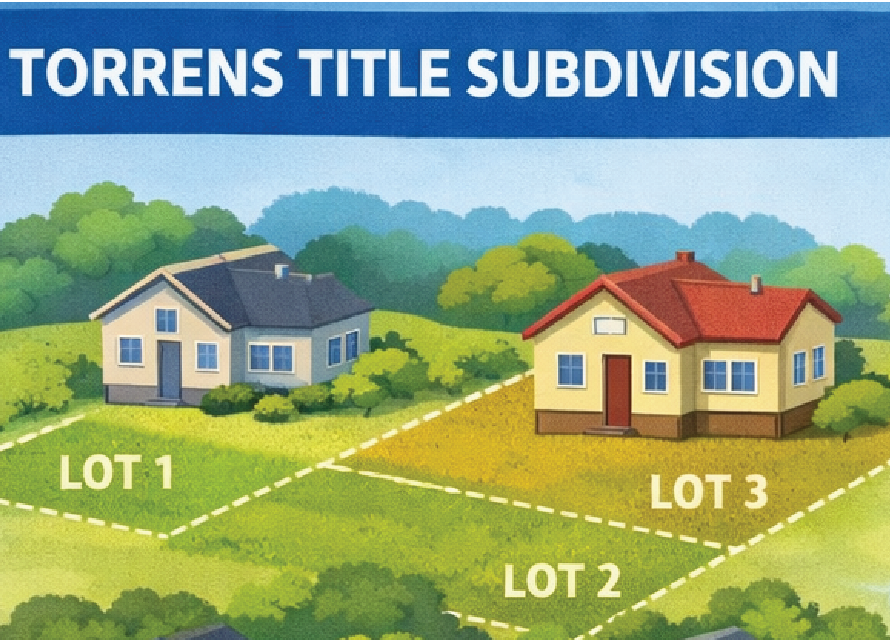
Torrens title subdivision
Torrens title subdivision of a Pattern Book development is permitted as complying development, with two carve outs. It is not available for manor houses, and it is not available where any part of one dwelling sits above another dwelling. Practically, that means duplexes, terraces and townhouses with side by side layouts can be Torrens subdivided through CDC. Stacked layouts cannot.
Strata title subdivision
Strata title subdivision of a Pattern Book development is permitted as complying development across all Pattern Book types, including manor houses and any layout with stacked dwellings. The strata pathway is the catch-all where Torrens is not available.
Concurrent or separate
You can do the building and the subdivision in the same CDC, or you can do them separately. A common approach we run is the building CDC first, then a separate Subdivision Certificate or Strata Certificate once the building is complete or substantially complete.
Who issues what: council vs private certifier
This is the part that confuses developers most. Here is the clean version.
For a low-rise Pattern Book CDC (building plus subdivision), either Council or a private Registered Certifier with the right accreditation can issue the CDC. Most developers use a private Certifier for speed and certainty.
For a Torrens Subdivision Certificate where the consent is a DA (including a streamlined mid-rise pattern DA), only Council can issue the Subdivision Certificate. A Registered Subdivision Certifier cannot. This is a hard rule under the EP&A Act for DA subdivision.
There is no Subdivision Works Certificate (SWC) on a Pattern Book project. All civil works sit under the building approval. For low-rise patterns, civil works are covered by the building CDC. For mid-rise patterns, civil works are approved through the building Construction Certificate (CC) issued in accordance with the DA consent.
For a Strata Certificate, the issuer must be a Registered Strata Certifier or Council, under the Strata Schemes Development Act 2015. The underlying building approval can be a DA or a CDC. It does not matter.
So to answer the second common question directly: Yes, if Council approves the building under a DA using a Pattern Book design, a Registered Strata Certifier can still issue the Strata Certificate. The strata pathway sits separately from the building consent pathway. But for Torrens subdivision under a DA, the Subdivision Certificate stays with Council.
How to apply for a Pattern Book CDC
Buy the pattern from the NSW Government. Engage a registered designer (an architect or accredited designer) to prepare the architectural drawings to match the pattern, plus a BASIX certificate, stormwater plan, waste management plan and any other documents required under the Pattern Book Development Code. Engage a registered certifier to lodge and determine the CDC. Neighbours are notified for 7 days. Determination is made within 10 days of a complete application. The CDC then operates as both the planning approval and the construction certificate to begin work.
Pattern Book CDC cost
Torrens title subdivision of a Pattern Book development is permitted as complying development, with two carve outs. It is not available for manor houses, and it is not available where any part of one dwelling sits above another dwelling. Practically, that means duplexes, terraces and townhouses with side by side layouts can be Torrens subdivided through CDC. Stacked layouts cannot.
Common situations, simplified
Three usual setups cover most projects.
A side by side duplex on an eligible lot using a low-rise pattern: one CDC covers the build and the Torrens subdivision, determined in 10 days, registered after construction.
A townhouse or manor house using a low-rise pattern: the CDC covers the build, then a separate strata CDC covers the strata subdivision once the building is substantially complete. A private strata certifier issues the Strata Certificate.
A mid-rise pattern: building approved under a streamlined DA by council, civil works covered by the Construction Certificate issued under the DA consent, Strata Certificate by a private strata certifier on completion. If the project is Torrens, council issues the Subdivision Certificate. Across these scenarios we cover all NSW Councils with a 1 to 2 business day response.
Frequently asked questions
Does council approve a DA with Pattern Book designs, or do they issue a CDC?
It depends on scale. Low-rise Pattern Book developments are approved by CDC, which can be issued by council or a private certifier within 10 days. Mid-rise Pattern Book developments are approved by streamlined DA, which is issued by council. So both pathways exist, but they are not interchangeable.
If a building is approved by DA under the Pattern Book, can a private certifier still issue the Strata Certificate?
Yes. The Strata Certificate is governed by the Strata Schemes Development Act 2015. A registered strata certifier can issue it whether the building is approved by DA or CDC. The strata certification step is separate from the building consent.
Can any block use the Pattern Book?
No. The lot must be eligible for the relevant development type under the LEP or Codes SEPP. It must not be on bushfire prone land, a flood control lot, in a heritage conservation area, on a heritage item lot, on significantly contaminated land, or in a coastal hazard or foreshore area. It also has to have lawful public road access and meet any minimum lot size in the EPI.
How long does Pattern Book CDC subdivision actually take in practice?
The 10 day CDC clock is the easy part. Real timing depends on documentation readiness, neighbour notification, surveyor coordination for the plan of subdivision, and registration with NSW Land Registry Services after construction. A clean low-rise dual occupancy CDC with concurrent Torrens subdivision can run end to end in a few weeks once construction is signed off.
Conclusion
The NSW Pattern Book gives developers two faster pathways. Low-rise is a 10 day CDC issued by council or a private certifier. Mid-rise is a streamlined DA. Pattern Book standards override equivalent LEP and DCP controls, but permissibility still falls back to the LEP or Codes SEPP. Torrens or strata subdivision can be approved as complying development under the Pattern Book Development Code, with a few carve outs. For DA-approved Pattern Book projects, council issues the Torrens Subdivision Certificate, but a private strata certifier can still issue the Strata Certificate. There is no Subdivision Works Certificate on a Pattern Book project. Civil works sit under the building approval.
If you are planning a Pattern Book project in NSW and want clear advice on the certification pathway, Southwell Certifiers can help. To discuss your project and receive a no-obligation fee proposal, contact us on (02) 8734 5676, email admin@southwellcert.com.au, or request a fee proposal.
Pattern Book duplex and dual occupancy projects are concentrated in a handful of LGAs, and Canterbury-Bankstown leads NSW for CDC duplex subdivision approvals. If your site is there, our Canterbury-Bankstown subdivision certifier page explains the local pathway.