Strata Subdivision NSW
A strata subdivision divides a building and its land into individually owned lots and shared common property. The lots exist once NSW Land Registry Services registers the strata plan, and the plan cannot be registered without a strata certificate. Either a local council or a registered certifier can issue that certificate.
Southwell Certifiers works on strata subdivisions across metropolitan and regional NSW, under the Strata Schemes Development Act 2015 and the Subdivisions Code in the Codes SEPP.
What is a strata subdivision?
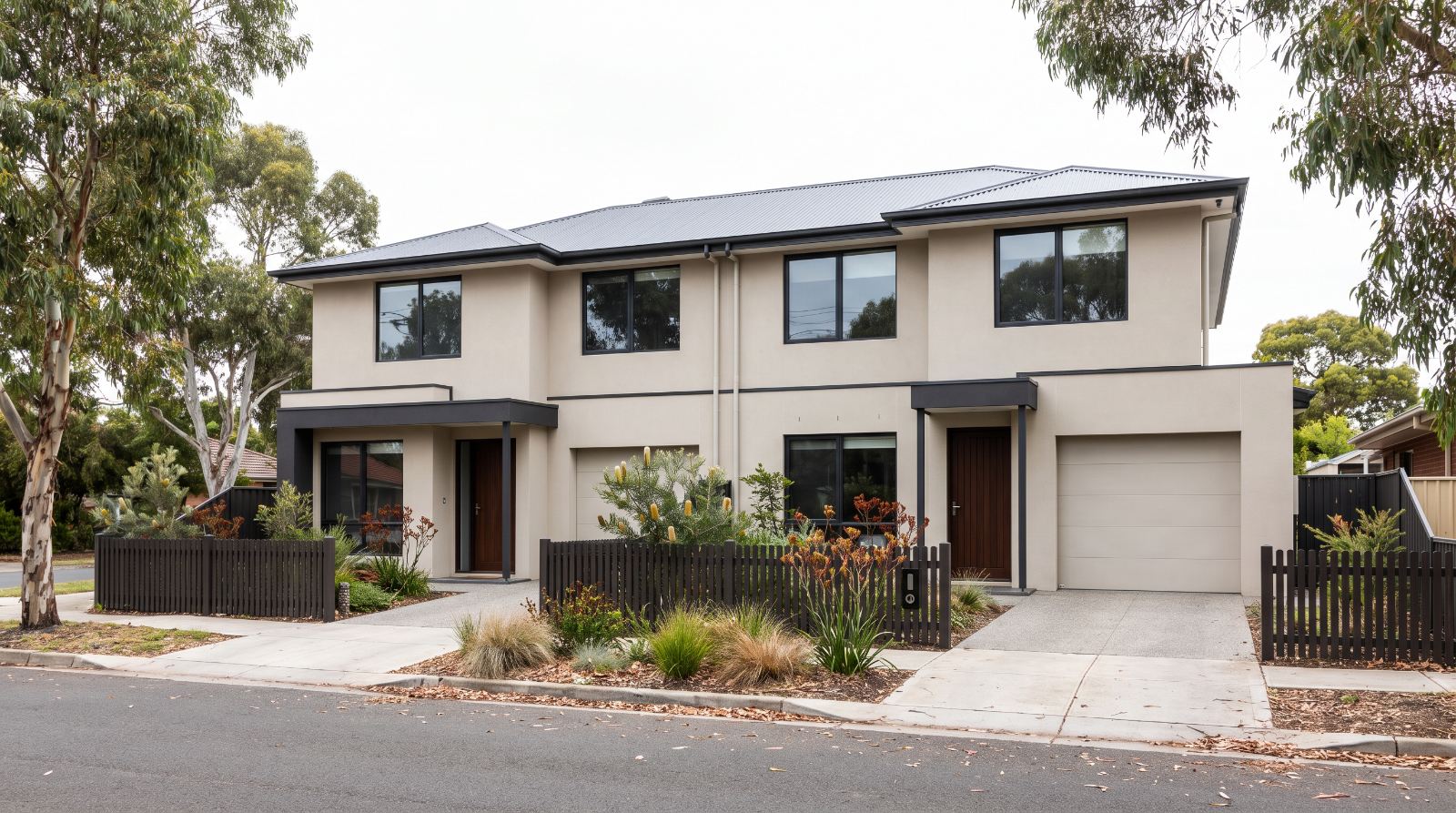
A strata subdivision creates separate titles inside a single building or site. Each owner holds their lot outright. Everything outside the lot boundaries, the driveway, the roof, the shared walls and the shared services, becomes common property owned collectively by the owners corporation.
The legal mechanism is the plan. Section 9 of the Strata Schemes Development Act 2015 allows land including the whole of a building, or part only of a building, to be subdivided into lots, or lots and common property, by registering a plan as a strata plan. Nothing exists until that registration happens.
Section 7 of the same Act defines subdivision precisely. It means altering boundaries to create two or more different lots, or lots and common property, or lots out of common property. It expressly excludes consolidating lots and converting lots into common property. Those are different transactions with different paperwork.
If you are still deciding between title types, see Torrens title or strata title.
Three different things people call a strata subdivision
The phrase gets used for three separate transactions. Getting the wrong one costs weeks.
1. Creating a new strata scheme. You have a building, or a building under construction, on one existing lot. Registering a strata plan under section 9 turns it into lots and common property and brings the owners corporation into existence. This is what most people mean.
2. Subdividing inside a scheme that already exists. The scheme is registered and you want to split one lot into two, or take in part of the common property. That is a strata plan of subdivision under section 13, not a strata plan. It carries its own requirements: a schedule of unit entitlement, a strata certificate, a surveyor’s certificate and a valuer’s certificate on the administration sheet, plus owners corporation consent. If the original owner still holds the land, section 13(4) blocks registration until the initial period has expired, unless the original owner owns every lot or the Tribunal orders otherwise. If the common property being subdivided is subject to a common property rights by-law, section 13(5) requires that by-law to be repealed or amended first.
3. Stratum subdivision, which is not strata. A stratum lot is a lot limited in height or depth by reference to Australian Height Datum. It is defined in section 196C of the Conveyancing Act 1919, and the definition expressly excludes lots under the Strata Schemes Development Act 2015. Stratum is used to separate, say, a retail podium from the residential tower above it. If someone has told you that you need a stratum subdivision, you are not in the strata system at all.
You have one existing lot with a building on it, or under construction.
Registering a strata plan divides it into lots and common property, and the owners corporation comes into existence.
This is what most people mean.
Strata Schemes Development Act 2015, s 9
The scheme is already registered. You want to split one lot in two, or absorb part of the common property.
Needs owners corporation consent, a unit entitlement schedule and a valuer’s certificate.
Different rules entirely.
Strata Schemes Development Act 2015, s 13
A stratum lot is limited in height or depth by reference to Australian Height Datum.
Used to separate, say, a retail podium from the residential tower above it.
The definition expressly excludes strata lots.
Conveyancing Act 1919, s 196C
Who needs a strata subdivision?
- Developers strata titling a dual occupancy, manor house, terraces or a residential flat building
- Owners of a duplex who want two saleable titles without a Torrens subdivision
- Builders finishing a project where the strata plan is the last step before settlement
- Owners corporations splitting a lot, or absorbing common property into a lot, inside an existing scheme
- Surveyors and town planners who need the certificate side handled while they run the plan
- Mixed-use developers separating commercial from residential, where stratum may be the right answer instead
CDC or DA, and which one applies to you
Two approval pathways lead to a strata subdivision. The one you can use is decided by how the building was approved, not by which you would prefer.
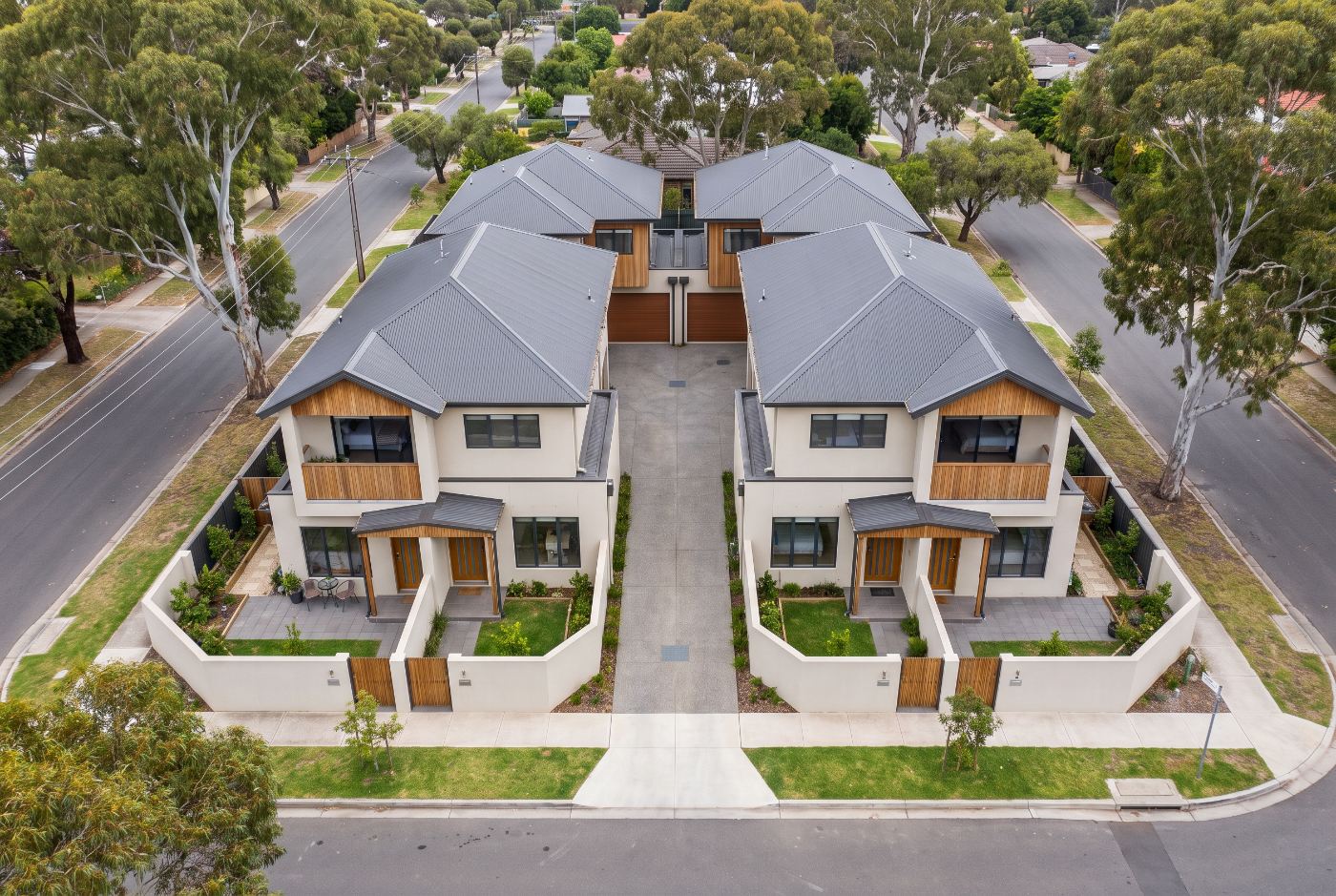
The complying development pathway. Part 6 Division 1 of the Codes SEPP makes certain strata subdivisions complying development. Clause 6.1(1) covers strata subdivision of a building for which development consent or a complying development certificate was granted or issued, and that window runs for five years from the date the consent or certificate was granted or issued. Clause 6.1(2) covers a dual occupancy, manor house or multi dwelling housing (terraces) approved by a CDC under the Low Rise Housing Diversity Code. Clause 6.1(3) covers a single application proposing both the build and the subdivision together.
Where it stops, and this catches people out. Clause 6.1(4) excludes secondary dwellings, boarding houses, group homes, and dual occupancies, except where subclause (2) or (3) applies. In plain terms: a dual occupancy approved under a development application cannot use this pathway. Only a dual occupancy whose CDC was issued under the Low Rise Housing Diversity Code, or one approved in a combined application, qualifies.
The standards that decide it. Under clause 6.2, the subdivision must not contravene any condition of the consent or CDC. For a dual occupancy or terraces, each dwelling needs lawful frontage to a public road other than a lane, no dwelling can sit behind another on the same lot except on a corner or parallel road lot, and each resulting lot must be at least 6m wide at the building line. Where no dwelling sits above another, the strata area, meaning the ground floor area of all the dwellings, must be at least 180m2.
If the CDC pathway is not open, the subdivision goes to council as a development application. That is a longer road, but the certificate work at the end is the same.
- No condition of the consent or CDC is contravened
- Lawful frontage to a public road, not a lane
- No dwelling behind another, except a corner or parallel road lot
- Each resulting lot at least 6m wide at the building line
- Strata area at least 180m2
The strata subdivision process in NSW
- Confirm the pathway. CDC under the Subdivisions Code, or a DA. Decided by how the building was approved and by clause 6.1. This step fixes your timeline, and it is worth getting right before anyone draws a plan.
- Get the approval. A complying development certificate, or development consent from council.
- Build, and comply with the conditions. Clause 6.2(a) requires the subdivision not to contravene any condition of the consent or CDC, so unresolved conditions stop the plan later.
- Have the strata plan prepared. A registered surveyor prepares the location plan, floor plan and administration sheet required by section 10(1), along with the proposed by-laws.
- Assemble the certificates. Unit entitlement schedule, surveyor’s certificate, valuer’s certificate, and a water supply authority certificate of compliance where the land sits in their area of operations.
- Apply for the strata certificate. Under section 53 the application can only come from the registered proprietor or owner, or someone with their written consent. A registered certifier can issue the strata certificate under Part 4 Division 3.
- Lodge for registration. NSW Land Registry Services registers the plan. The lots and the owners corporation exist from that moment, and the titles can be dealt with.
How long does it take and what does it cost?
The honest answer is that the certifier is rarely what governs the timeline. The plan preparation, the conditions of consent, and the water authority certificate usually are.
On our part of it: one to two business days. Either the certificate is issued, or you get back exactly what is outstanding. No queue, no chasing, no wondering.
What actually moves the date: how quickly the surveyor delivers the plan, whether every condition of the consent or CDC has been discharged, whether the water supply authority certificate is in hand, and, on a subdivision inside an existing scheme, whether the owners corporation consent is in the right form.
Cost depends on the number of lots, the pathway, and whether the scheme already exists. We quote fixed fees, not hourly rates, so the number you approve is the number you pay.
For why these jobs get a reputation for dragging, see why strata jobs get blamed for delays.
What we check before issuing
- The relevant planning approval is in force under section 52, and has not lapsed
- Every condition required to be satisfied before the certificate can issue has been satisfied
- The water supply authority certificate of compliance, where the land is in its area of operations
- The construction certificate route, or the alternative route, in section 58(1)(d)
- Unit entitlement schedule, surveyor’s certificate and valuer’s certificate on the administration sheet
- Owners corporation consent in the correct form where the plan is a strata plan of subdivision
- No unapproved encroachment onto a public place
- Any inspection prescribed by the regulations has been carried out
Why Southwell Certifiers?
Dean Dehghan-Khalaji is a Registered Certifier with the NSW Building Commission, BDC05320, across subdivision, strata, road and drainage, stormwater and hydraulic categories. He is a Chartered Professional Engineer, listed on the National Engineering Register, an APEC Engineer and IntPE(Aus), and a member of the Association of Australian Certifiers.
Fifteen years in local government at Penrith and Blacktown before private practice. He has assessed these applications from the council side, which is why the assessment comes back with the actual problem rather than a form letter.
You deal with Dean directly. No coordinator, no file handed between assessors, no waiting to find out who has it. More on the registered strata certifier role and the legislation behind it.
Strata subdivision FAQs
The questions we are asked most often, answered against the legislation rather than general practice.
What is a strata subdivision in NSW?
A strata subdivision divides a building and its land into separately owned lots and shared common property. Under section 9 of the Strata Schemes Development Act 2015, land including the whole or part of a building can be subdivided into lots, or lots and common property, by registering a plan as a strata plan. The lots come into existence when NSW Land Registry Services registers that plan.
Do I need council approval for a strata subdivision?
Not always. Part 6 Division 1 of the Codes SEPP makes some strata subdivisions complying development, which means a registered certifier can issue the certificate instead of council. Clause 6.1 sets out what qualifies, including a five year window from the date the original consent or CDC was granted or issued. If your development falls outside clause 6.1, it goes to council as a development application.
What is a strata subdivision of land?
Strictly, strata subdivides a building and the land it sits on, not bare land. Where there is no building, or where lots need to be divided by height or depth rather than by building, the answer is usually a Torrens subdivision or a stratum subdivision instead. A stratum lot is defined in section 196C of the Conveyancing Act 1919 and is expressly excluded from being a lot under the Strata Schemes Development Act 2015.
Can I strata subdivide a duplex under a CDC?
Only in specific circumstances. Clause 6.1(4)(d) of the Codes SEPP excludes dual occupancies from the strata subdivision code, except where clause 6.1(2) or 6.1(3) applies. That means a dual occupancy approved by a CDC under the Low Rise Housing Diversity Code, or one approved in a single application covering both the build and the subdivision. A dual occupancy approved under a development application does not qualify.
What is the difference between a strata subdivision and a strata plan of subdivision?
A strata plan under section 9 creates a new scheme where none existed. A strata plan of subdivision under section 13 alters lots or common property inside a scheme that already exists. The second carries extra requirements, including owners corporation consent and, where the original owner still holds the land, the initial period restriction in section 13(4).
Does a strata subdivision need an Occupation Certificate?
No. An Occupation Certificate is not among the preconditions a registered certifier must be satisfied of before issuing a strata certificate under section 58. That requirement belongs to Subdivision Certificates on Torrens subdivisions, and the two are regularly confused.
How many lots can a strata subdivision create?
The Act does not cap it. What limits you is the approval. The subdivision must not contravene any condition of the consent or CDC under clause 6.2(a), and where the complying development pathway is used, the lot width, frontage and strata area standards in clause 6.2 have to be met by every resulting lot.
Who can apply for the strata certificate?
Under section 53, only the registered proprietor or owner of the land, or another person acting with their written consent. In practice the surveyor or project manager usually lodges it, holding the owner’s written consent.
Not sure which pathway applies to your site?
Send the approval and the plan. You get a written answer on whether the complying development pathway is open under clause 6.1, at no cost. If it is not open, we will tell you what the development application route looks like instead.
Southwell Certifiers issues strata certificates across metropolitan and regional NSW. See subdivision and strata certification for the full service.
Written by Dean Dehghan-Khalaji, CPEng, Registered Certifier (BDC 05320), AAC member. Dean is the principal certifier at Southwell Certifiers, specialising in subdivision and strata certification across NSW.