
Torrens title means you own the land and everything on it outright. Strata title means you own your individual lot, plus a shared interest in common property managed by an owners corporation. That single difference drives everything else: costs, control, insurance, and how the property is subdivided and certified.
This guide explains both systems, the practical differences that matter, and what each pathway looks like if you are creating the titles through a subdivision.
What is Torrens title?
Torrens title is the standard form of land ownership in NSW. It operates under the Real Property Act 1900, which established title by registration: whoever is recorded on the register owns the land, and the government guarantees that record.
When you hold a Torrens title, you own the lot in its entirety. The land, the house, the driveway, the backyard. There is no shared property, no body corporate, and no levies.
What you control under Torrens title
You are responsible for the whole property and answerable to no other owners. You maintain it, insure it, and (subject to planning rules) alter it on your own terms. Renovations, landscaping, a new fence: these are between you and your council or certifier, not a committee.
That independence is why Torrens title properties generally command stronger resale values than comparable strata lots. Buyers pay for control.
What is strata title?
Strata title divides a building or parcel into individual lots plus common property. You own your lot, typically defined by the interior surfaces of the walls, floor and ceiling. The external walls, roof, driveways, stairwells and shared services usually sit in common property, owned collectively by all lot owners.
Strata schemes in NSW are created under the Strata Schemes Development Act 2015 and run day to day under the Strata Schemes Management Act 2015.
How a strata scheme works
Registration of a strata plan automatically creates an owners corporation. Every lot owner is a member. The owners corporation insures the building, maintains common property, and funds both through levies on each lot.
Decisions about common property are collective. If the roof leaks or the driveway cracks, that is an owners corporation problem, funded by everyone. If you want to change anything on common property, you need approval, even when that "common property" is the outside wall of your own duplex.
Torrens vs strata: the key differences
| Torrens title | Strata title | |
|---|---|---|
| What you own | The whole lot: land and structures | Your lot plus a share of common property |
| Governing law | Real Property Act 1900 | Strata Schemes Development Act 2015; Strata Schemes Management Act 2015 |
| Levies | None | Quarterly levies set by the owners corporation |
| Building insurance | You arrange your own | Owners corporation insures the building |
| Maintenance | All yours | Lot is yours; common property is shared |
| Changes and renovations | Planning approval only | Planning approval plus owners corporation approval for common property |
| Resale | Generally stronger for comparable properties | Levies and bylaws can narrow the buyer pool |
| Typical use | Houses, duplex sides on separate lots, land subdivisions | Apartments, townhouses, duplexes sharing structure |
What the title choice means when you subdivide
This is the part most comparison articles skip, and it is where the two systems diverge most in practice.
Torrens title subdivision
A Torrens title subdivision creates new land parcels. The pathway runs through Part 6 of the Environmental Planning and Assessment Act 1979: development approval (DA or CDC), any subdivision works, then a subdivision certificate that authorises registration of the plan at NSW Land Registry Services.
Torrens subdivisions usually carry the heavier physical requirements. Each new lot generally needs its own services, drainage and access, and easements or restrictions are created through a section 88B instrument under the Conveyancing Act 1919. Where subdivision works are involved, a subdivision works certificate must be obtained before construction starts.
Strata title subdivision
A strata subdivision divides buildings, not bare land. Instead of a subdivision certificate, the strata plan needs a strata certificate under Part 4 of the Strata Schemes Development Act 2015, issued by a registered certifier or the council, before NSW Land Registry Services will register the scheme.
The certifier’s assessment is different too. A strata certificate is about whether the building work shown in the plan is consistent with the development consent or complying development certificate. The physical works burden is usually lighter than Torrens, which is one reason strata is often the faster and cheaper route for attached dwellings. The certificates are commonly confused, and we compare them directly in strata certificate vs subdivision certificate.
The duplex question
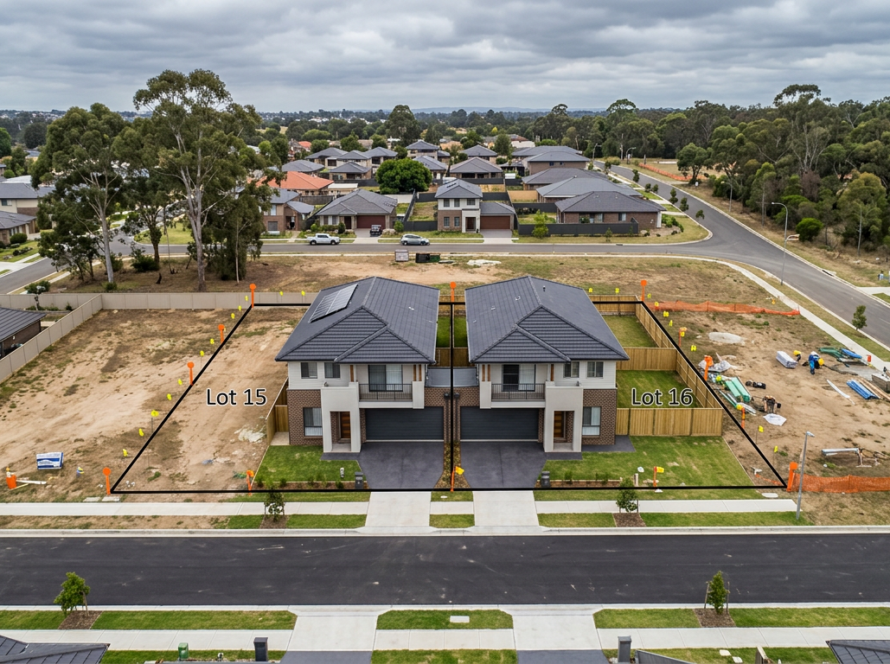
For duplexes and dual occupancies, the choice between Torrens and strata is a genuine decision with money attached. Torrens gives each side its own land and typically a better sale price, but demands more from the site: servicing, drainage, and lot size compliance. Strata tolerates shared structure and is often the only option where the build or the site will not support separate lots.
In the 12 months to May 2026, Canterbury-Bankstown alone recorded 203 CDC dual occupancy approvals, the highest of any NSW council, and most of those projects face exactly this decision. We cover it in detail, including when each option is available under the Low Rise Housing Diversity Code and the CDC pathway, in can you subdivide a duplex in NSW and the related lot size rules for dual occupancy subdivision.
Which title should you choose?
If you are buying: Torrens title buys control and typically stronger capital growth; strata buys a lower entry price and shared upkeep. Neither is universally better. Match the title to how you want to live and what you want to maintain.
If you are developing or subdividing, the decision is more technical:
- Choose Torrens where the site can deliver separate lots with independent access and services, and the end values justify the works.
- Choose strata where dwellings share structure, where servicing separate lots is impractical, or where speed and cost matter more than the Torrens premium.
- Consider community title where you need shared infrastructure (a private road, shared basin) across otherwise independent lots. It is a third system under the Community Land Development Act 2021, not a variant of strata.
One more reality check: converting strata to Torrens later is rarely straightforward. It is a fresh subdivision requiring development approval, full compliance of each lot as a standalone parcel, and the winding up of the existing scheme. It is far cheaper to choose the right title structure before the plan is registered than to unwind the wrong one after.
FAQ: Torrens title vs strata title
Is Torrens title better than strata title?
Neither is better in all cases. Torrens gives you full ownership and control with no levies, and usually stronger resale value. Strata offers lower entry cost and shared responsibility for the building. For subdivisions, the site and the build often decide for you: separate serviceable lots favour Torrens, shared structure favours strata.
Can you convert strata title to Torrens title in NSW?
Yes, but it is effectively a new subdivision. You need development approval, each lot must comply as a standalone parcel with its own services and access, and the existing strata scheme must be terminated. Most owners find the cost and complexity outweigh the benefit, which is why choosing correctly at the start matters.
Does a duplex have to be strata titled?
No. A duplex can be Torrens titled if the site supports separate lots, with independent services and compliant access for each side. Where the two dwellings share structure or the site cannot deliver separate lots, strata is usually the practical pathway.
What is a section 88B instrument?
A section 88B instrument, made under the Conveyancing Act 1919, creates easements, restrictions and positive covenants when a plan is registered. In Torrens subdivisions it is how rights like shared driveways, drainage easements and building envelopes are formally put on title.
What certificate do I need to register the plan?
A Torrens subdivision plan needs a subdivision certificate under the Environmental Planning and Assessment Act 1979. A strata plan needs a strata certificate under the Strata Schemes Development Act 2015. Both can be issued by a registered certifier, and NSW Land Registry Services will not register the plan without the right one.
Is community title the same as strata?
No. Community title operates under the Community Land Development Act 2021 and suits estates where independent lots share infrastructure such as private roads or drainage. Owners hold their lots outright, more like Torrens, while shared assets sit with a community association.
The takeaway
Torrens title means owning land outright; strata title means owning a lot within a shared scheme. For buyers it is a lifestyle and cost decision. For anyone subdividing, it sets the entire certification pathway: subdivision certificate and 88B instrument on the Torrens side, strata certificate on the strata side, with different works, costs and timeframes attached.
If you are planning a subdivision in NSW and want clear advice on the right title structure and certification pathway, Southwell Certifiers can help. To discuss your project and receive a no-obligation fee proposal, contact us on (02) 8734 5676, email admin@southwellcert.com.au, or request a fee proposal.
Written by Dean Dehghan-Khalaji, CPEng, Registered Certifier (BDC 05320), AAC Member. Dean is the principal certifier at Southwell Certifiers, specialising in subdivision and strata certification across NSW.