
A Subdivision Certificate is the final approval needed before new land titles can be created.
When land is subdivided, a surveyor prepares a plan of subdivision that shows the new lots, boundaries, and any easements.
Before this plan can be registered, a Subdivision Certifier or Council must confirm that the subdivision meets the requirements of the planning approval.
Once everything complies, the Authority signs the administration sheet that accompanies the subdivision plan.
This signed approval is called the Subdivision Certificate.
After the certificate is issued, the plan can be lodged with NSW Land Registry Services (LRS) to create the new property titles.
In simple terms:
No Subdivision Certificate = no new land titles.
When is Subdivision Certificate Required?
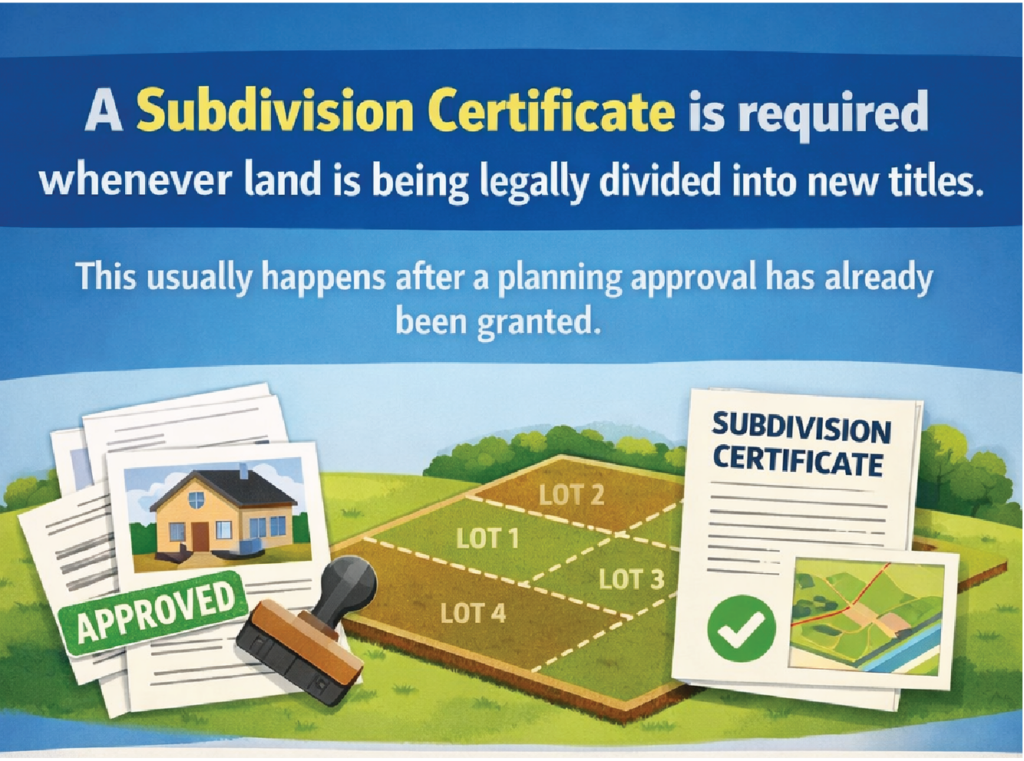
A Subdivision Certificate is required whenever land is being legally divided into new titles.
This usually happens after a planning approval has already been granted.
The two most common approvals that allow subdivision in NSW are:
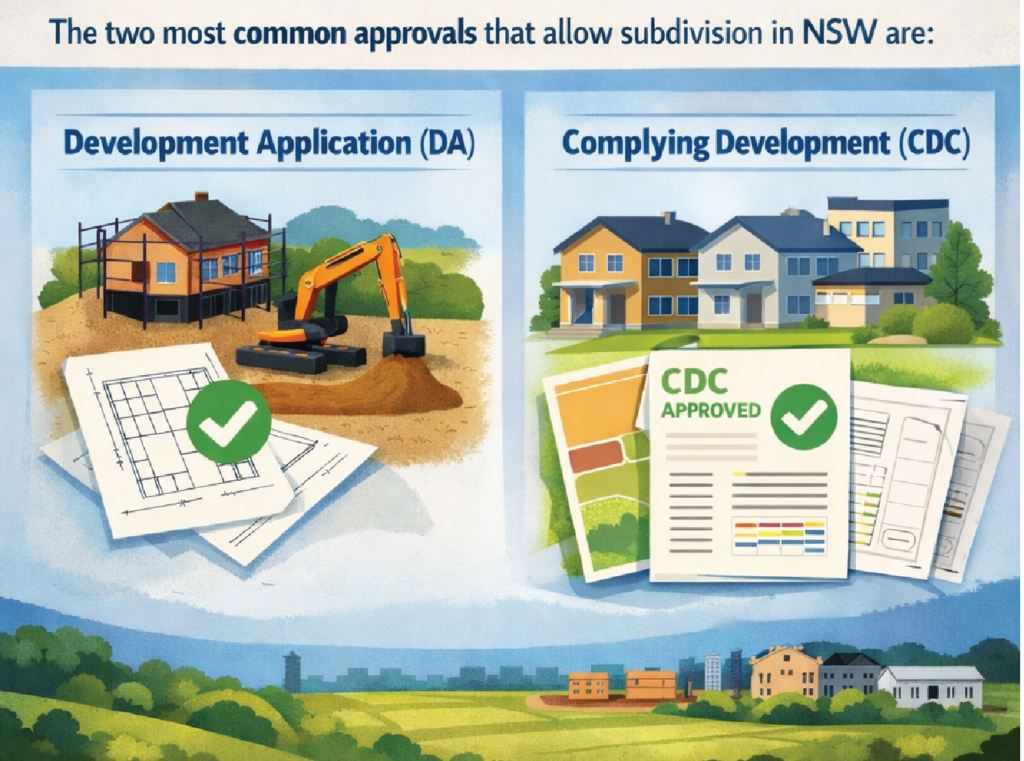
Development Application (DA)
A Development Application is approved by the local council.
The DA may approve:
subdivision of land
construction of buildings
or both
In most cases a Subdivision DA will require a subdivision works certificate (SWC), once the SWC works are completed and consent conditions are satisfied, a Subdivision Certificate can be issued.
Complying Development Certificate (CDC)
A Complying Development Certificate is a faster approval pathway for developments that meet stricter planning rules. For example:
duplex developments
multi-dwelling housing
- residential & commerical buildings (Strata only)
- Industrial Units (Strata only)
Under the CDC pathway, the subdivision approval normally follows a building CDC for the development.
The CDC pathway can be faster than a DA, but has less flexible standards.
Types of Subdivision Titles
Subdivision can create different types of property titles.
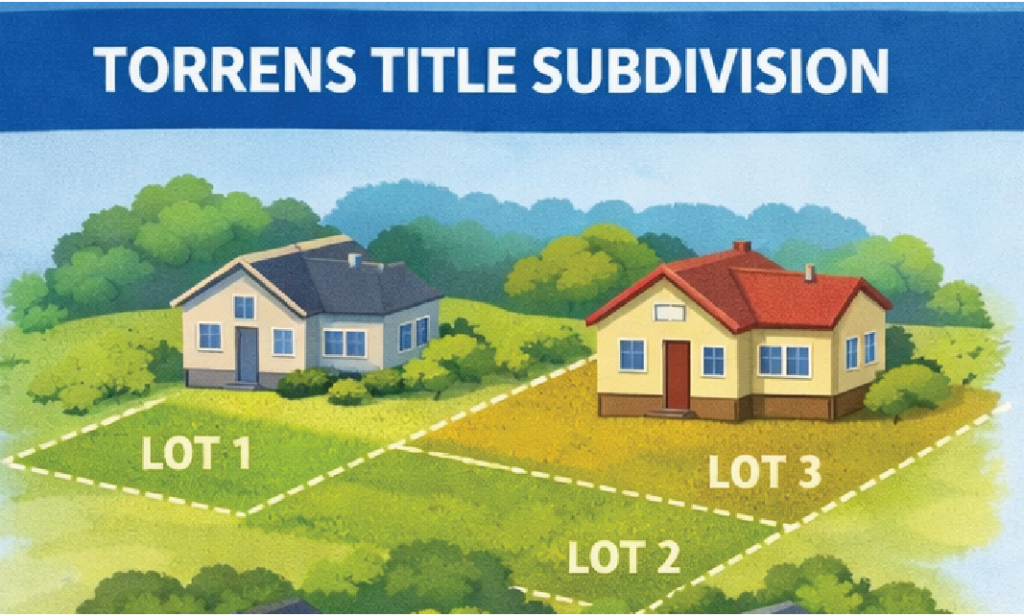
Torrens Title Subdivision
This is the most common type of subdivision.
It creates separate lots of land, each with its own title.
Examples include:
splitting one lot into two residential lots
creating multiple house lots in a subdivision
Each lot becomes an independent property.
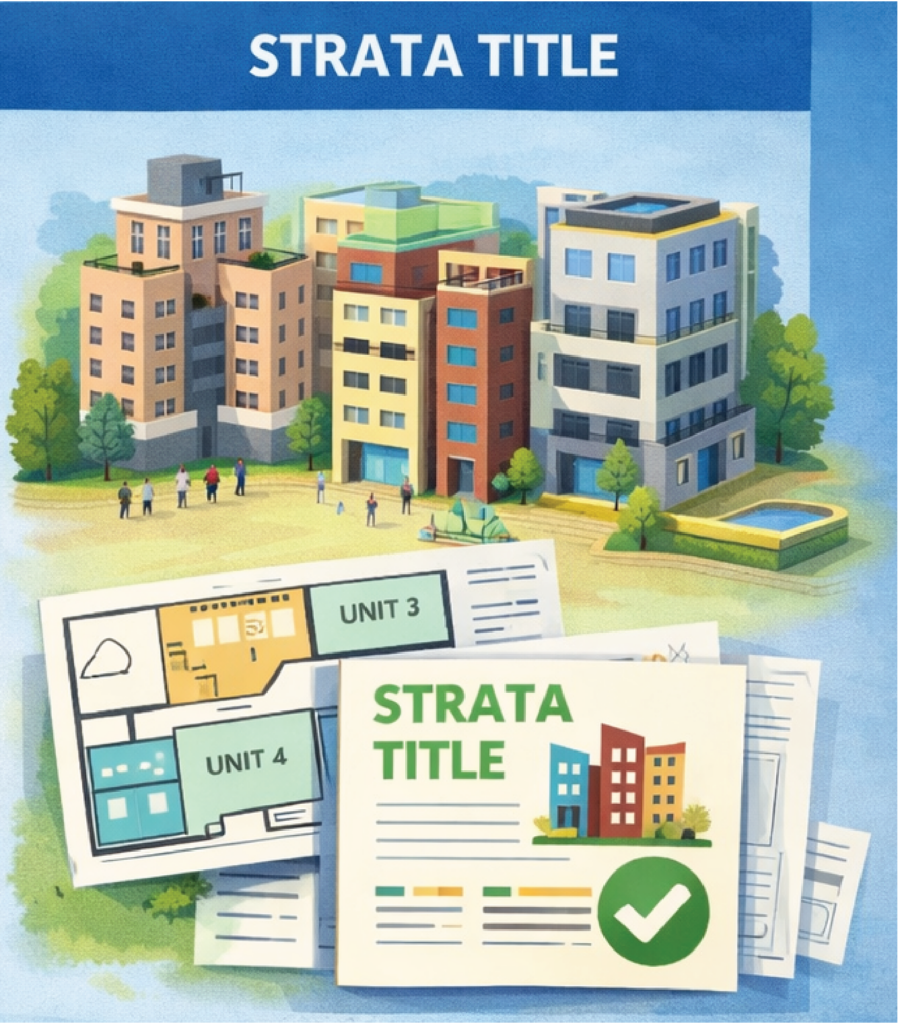
Strata Subdivision
This is the most common type of subdivision.
It creates separate lots of land, each with its own title.
Examples include:
splitting one lot into two residential lots
creating multiple house lots in a subdivision
Each lot becomes an independent property.
What does the Certifier Assess?
Before issuing a Subdivision Certificate, the certifier must confirm that the subdivision complies with the planning approval. This usually involves checking:
Approved Plans
The final subdivision plan must match the approved plans under the DA or CDC. They must also capture any;
- Easements (draiage or support)
- Rights of Way
- Positive Covenants
- Restrictions on the land
Conditions of Consent
The certifier must verify that all conditions required before the issue of a Subdivision Certificate have been satisfied.
These conditions are typically set out in:
the Development Consent, or
the Codes SEPP (Subdivision Code) for CDC approvals.
Supporting Doucmentation
The certifier must review the required documentation and ensure it is complete and accurate before the certificate can be issued.
Lorem ipsum dolor sit amet, consectetur adipiscing elit. Ut elit tellus, luctus nec ullamcorper mattis, pulvinar dapibus leo.
What Documents are Required?
A typical Subdivision Certificate for a CDC application may include:
-
Application through the NSW Planning Portal
-
Final Subdivision Plan and Administration Sheet
-
Section 88B Instrument (creating easements or restrictions)
-
Identification Survey (if required)
-
Works-As-Executed Stormwater Plans
-
Services Certificate from the Registered Surveyor
-
Sydney Water Section 73 Certificate
-
Notification of Arrangement from the electricity provider
-
Telecommunications service confirmation
-
Gas authority confirmation (if applicable)
-
Final Occupation Certificate for the building
-
Evidence of Housing & Productivity Contribution payment (if applicable)
-
Evidence of Section 7.11 council contributions
-
Site inspection confirming boundary fencing where required
Providing complete documentation early can significantly reduce delays.
How Long Does a Subdivision Certificate Take?
Once all documents are provided and verified, a Subdivision Certificate can often be issued within 1–2 business days.
However, most delays occur before the application is submitted, while applicants gather required documents from authorities such as:
Sydney Water
electricity providers
telecommunications companies
local council
A certifier cannot obtain these documents on behalf of the applicant and then issue the certificate.
Doing so would create a conflict of interest under the Building and Development Certifiers Act 2018.
What Happens After the Subdivision Certificate Is Issued?
After the Subdivision Certificate is signed:
The documents are returned to the applicant.
The applicant sends them to their Registered Surveyor.
The surveyor lodges the plan with NSW Land Registry Services (LRS).
LRS registers the subdivision and creates the new property titles.
Once registration occurs, the new lots legally exist and can be sold or transferred.
DA vs CDC Subdivision Approvals
Subdivision can follow two main approval pathways.
Development Application (DA)
Advantages
More flexible design options
Can apply to a wider range of sites
Disadvantages
Usually slower
Requires council assessment
Complying Development Certificate (CDC)
Advantages
Faster approval process
Can be issued by a private certifier
Disadvantages
Must meet strict planning standards
Not suitable for all sites
Common Reasons Subdivision Certificates Are Delayed
Subdivision Certificates are often delayed due to missing or incorrect documentation.
Common problems include:
Errors in the subdivision plan or administration sheet
Incorrect wording in the Section 88B Instrument
Easements missing from the plan
Incorrect Sydney Water Section 73 Certificate
Required positive covenants for On-Site Detention (OSD) not created
Conditions of consent not satisfied
Careful preparation of documentation can prevent most delays.
How to Speed Up a Subdivision Certificate
After the Subdivision Certificate is signed:
The documents are returned to the applicant.
The applicant sends them to their Registered Surveyor.
The surveyor lodges the plan with NSW Land Registry Services (LRS).
LRS registers the subdivision and creates the new property titles.
Once registration occurs, the new lots legally exist and can be sold or transferred.

Need Help With a Subdivision Certificate?
If you are planning a subdivision in NSW and need assistance with a Subdivision Certificate, Southwell Certifiers can help guide you through the process and review your documentation before submission.