
You have development consent. The engineering drawings are being finalised. The civil contractor is lining up. But before a single bucket of earth is moved on site, one approval must be in place: the Subdivision Works Certificate (SWC)
The SWC is a legal prerequisite for starting subdivision civil works in NSW. Without it, work cannot lawfully commence. Get it wrong or misunderstand the timing, and the project stalls before it starts.
This guide explains what a subdivision works certificate is, when you need one, what the application requires, and how the process works from lodgement to determination. Whether you are managing a 2-lot infill or a 150-lot residential staged subdivision, the pathway is the same.
What Is a Subdivision Works Certificate in NSW?
A Subdivision Works Certificate is a post-consent approval required before commencing any civil works associated with a subdivision under a development consent. It certifies that the proposed subdivision works, as shown on detailed engineering plans, are consistent with the development consent and comply with all relevant regulatory requirements.
The SWC sits within the post-consent certificate framework under Part 6 of the Environmental Planning and Assessment Act 1979. It is the subdivision equivalent of a Construction Certificate for building works.
What Does the SWC Actually Certify?
The SWC confirms two things. First, that the detailed engineering plans and specifications for the subdivision works are consistent with the approved development consent. Second, that those works will comply with relevant regulations, technical standards, and conditions of consent.
It does not approve the subdivision itself. That is the role of the development consent. The SWC authorises construction of the civil infrastructure needed to satisfy the conditions of that consent.
SWC vs Construction Certificate: What Changed in 2019
Prior to 1 December 2019, subdivision civil works were covered by a Construction Certificate. There was no separate SWC. The reforms to Part 6 of the EP&A Act introduced the Subdivision Works Certificate as a distinct approval, separating the certification of subdivision infrastructure from building works.
This matters because many project teams, particularly those returning to subdivision after a gap, still assume a Construction Certificate covers civil works. It does not. Since December 2019, if your DA-approved subdivision involves civil infrastructure, you need an SWC. A Construction Certificate is still required separately for any building works on the site.
When Do You Need a Subdivision Works Certificate?
You need an SWC whenever your DA-approved subdivision requires physical civil works before a subdivision certificate can be issued. This applies to the vast majority of subdivisions involving new lots.
What Counts as Subdivision Works?
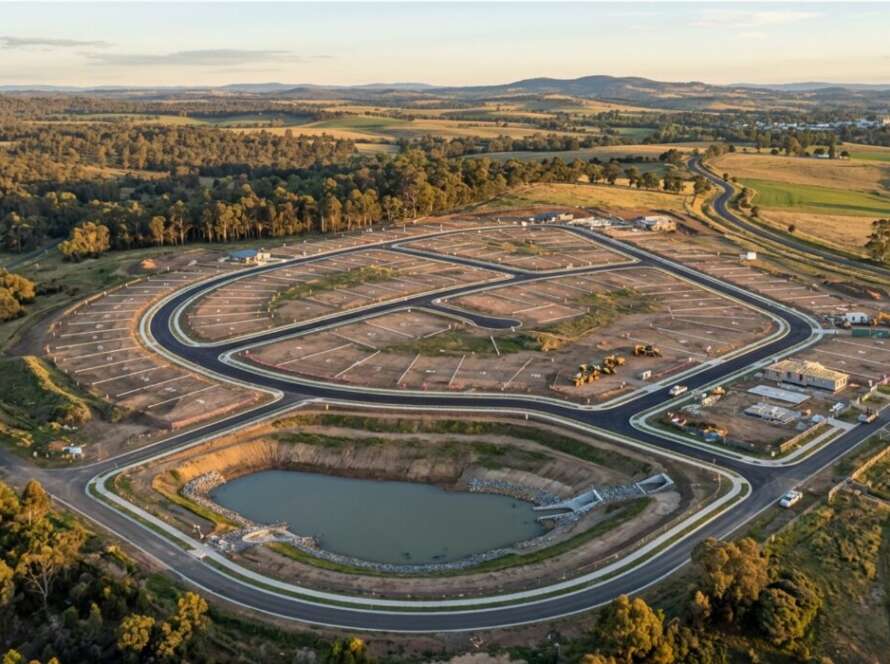
Under the EP&A Act, subdivision works include roadworks, drainage and stormwater infrastructure, sewerage works, earthworks, retaining walls, utility service connections, and landscaping or public domain works required by conditions of consent.
If your consent conditions require any of these to be completed before the land can be registered as separate lots, an SWC is required before those works can start.
When Is an SWC Not Required?
An SWC is not required for subdivisions approved under a Complying Development Certificate. It also does not apply to subdivisions that involve no physical civil works, for example a boundary adjustment or a strata subdivision of an existing building where no new infrastructure is needed. Some Crown developments are also exempt.
If your subdivision involves building works only (no civil infrastructure), a Construction Certificate covers that scope. The SWC applies specifically to civil and subdivision infrastructure.
Who Issues a Subdivision Works Certificate in NSW?
An SWC is not required for subdivisions approved under a Complying Development Certificate. It also does not apply to subdivisions that involve no physical civil works, for example a boundary adjustment or a strata subdivision of an existing building where no new infrastructure is needed. Some Crown developments are also exempt.
If your subdivision involves building works only (no civil infrastructure), a Construction Certificate covers that scope. The SWC applies specifically to civil and subdivision infrastructure.
The Role of a Registered Certifier on DA Subdivisions
Under section 6.5 of the EP&A Act, a Registered Certifier can issue a Subdivision Works Certificate (s6.5(2)(a)) and carry out inspections of subdivision work, provided they are the principal Certifier or have the principal Certifier’s approval (s6.5(2)(b)).
However, when it comes to issuing the Subdivision Certificate at the end of the project, s6.5(3) limits this function. A Certifier can only issue a Subdivision Certificate if they are a Council, or a Registered Certifier authorised by an environmental planning instrument, and in cases involving subdivision works, they must also be the principal Certifier (s6.5(3)(b)).
In practice, most EPIs do not authorise Registered Certifiers to issue Subdivision Certificates for DA-approved subdivisions. This means Council is the principal Certifier for the vast majority of DA subdivision projects.
What a Registered Certifier Can Do
A Registered Certifier still plays a valuable role on DA subdivisions. They can issue the SWC, carry out inspections of private infrastructure (drainage, retaining walls, internal roads not being dedicated), and issue compliance certificates for those works, depending on Council arrangements.
Where public infrastructure such as roads are being dedicated to Council, Council will typically retain oversight of those inspections directly as part of their Principal Certifier role.
What to Look for When Choosing a Certifier for Your SWC
Experience across a range of Councils and project scales matters. Subdivision engineering standards vary between local government areas, and a Subdivision Certifier in NSW who has worked across multiple Councils will be familiar with the technical requirements and referral processes that apply in your area.
Southwell Certifiers has issued SWCs across 35+ NSW Councils, on projects ranging from 2-lot infill subdivisions to 300+ lot greenfield sites, covering metropolitan Sydney, the Hunter, Illawarra, South Coast, and Regional NSW.
How to Apply for a Subdivision Works Certificate: Step by Step
The SWC application process follows a clear sequence. Skipping steps or submitting incomplete documentation is the most common cause of delays.
Step 1: Secure Development Consent
The SWC can only be issued in connection with an approved DA. You need the consent notice, the approved plans, and a clear understanding of the conditions that relate to subdivision works. These conditions drive everything that follows, from the engineering design through to the documentation checklist for the SWC application.
Step 2: Contact a Registered Certifier or Council
Once you have consent, engage a Registered Certifier or Council to discuss the SWC application. A Registered Certifier can issue the SWC under s6.5(2)(a) of the EP&A Act and can advise on the documentation requirements, engineering standards, and any authority referrals that will be needed.
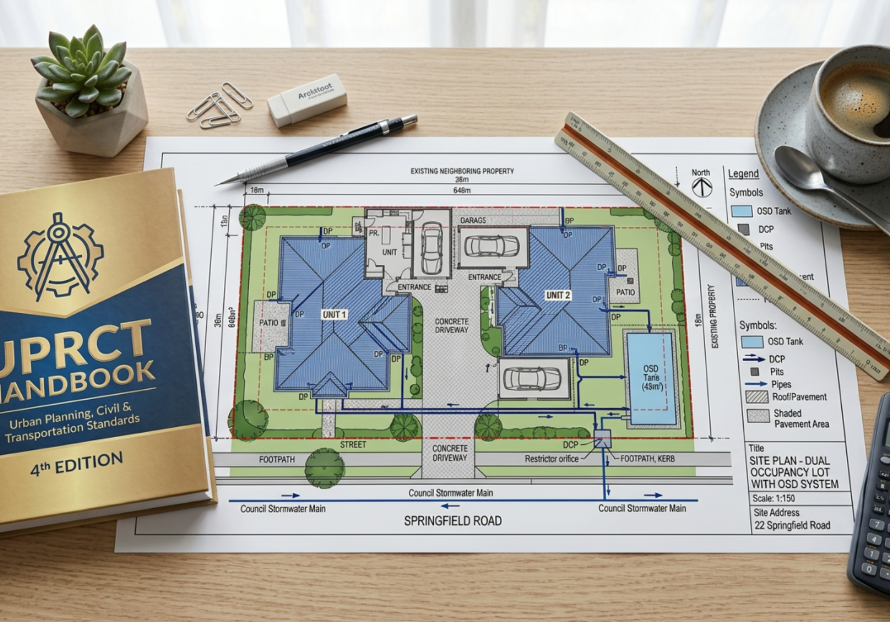
This is also the stage to prepare your detailed engineering drawings. DA-approved plans are conceptual. They show lot layout and general intent. The SWC application requires fully detailed construction-level plans covering road design, stormwater drainage, sewer and water reticulation, earthworks, erosion and sediment control, utility layouts, and landscaping. These must be prepared by a suitably qualified civil engineer and demonstrate compliance with both the conditions of consent and the relevant council engineering standards.
Engaging the Certifier early means your engineering team can design to the right standards from the start, reducing the risk of rework during assessment.
Step 3: Lodge the SWC Application on the NSW Planning Portal
The application is lodged with the Certifier (Council or Private) along with all supporting documentation. In some local government areas, lodgement can be done online through the NSW Planning Portal. Where the portal is not yet available, applications go directly to the Certifier.
The application must include the detailed engineering plans, a compliance report addressing all relevant conditions of consent, evidence of long service levy payment (for works exceeding $25,000), and any required authority referrals or approvals.
Step 4: Assessment, Referrals, and Determination
The Certifier assesses the engineering plans against the consent conditions, relevant technical standards, and any applicable council engineering specifications. This may involve referrals to utility authorities (Sydney Water, Ausgrid, etc.) and internal council departments.
Once the Certifier is satisfied that the plans are consistent with the consent and comply with all regulatory requirements, the SWC is issued.
Step 5: Appoint the Principal Certifier and Notify Council
With the SWC approved, you need to appoint the Principal Certifier and notify Council of your intention to commence subdivision works before anything starts on site. For DA-approved subdivisions, council acts as principal certifier in most cases under s6.5(3) of the EP&A Act. If you have also engaged a registered certifier to carry out inspections of private infrastructure, their role should be formalised at this stage alongside council’s PC appointment.
The notification to Council must be given at least two days before work commences. Only after the PC is appointed and Council is notified can civil works lawfully begin.
What Documents Do You Need for an SWC Application?
Every SWC application is different, but the core documentation requirements are consistent.
Engineering Plans and Specifications
Detailed civil engineering plans covering road design, grading, stormwater management, sewer layout, water reticulation, electrical and telecommunications servicing, earthworks, and erosion and sediment control. Plans must be to construction standard, not concept or DA level.
Compliance Report Against Conditions of Consent
A report prepared by the applicant’s engineer (or Certifier) that maps each relevant condition of consent to the corresponding plan or document, confirming compliance. This is critical. Incomplete compliance reports are a leading cause of requests for additional information and delays.
Long Service Levy and Section 7.11/7.12 Contributions
A long service levy receipt is required for subdivision works valued over $25,000. This must be paid before the SWC can be issued.
Section 7.11 or 7.12 development contributions are typically conditioned to be paid before the Subdivision Certificate (the final certificate), not the SWC. However, some Councils do condition contributions to be paid before the SWC is issued. Check your specific conditions of consent carefully, as this varies between Councils.
Authority Referrals and Utility Approvals
Where required by the conditions of consent, you will need letters of approval or compliance from utility authorities, typically Sydney Water, the electricity distributor, and telecommunications providers. Some Councils also require sign-off from their own internal departments (traffic, drainage, parks) before the SWC can be issued.
How Long Does a Subdivision Works Certificate Take?
Timeframes depend on the complexity of the subdivision, the completeness of the application, and how quickly authority referrals come back.
For small subdivisions (2–10 lots), a well-prepared application with complete documentation can be assessed in 1 to 2 days. For larger subdivisions (50+ lots), expect 2 to 3 days, particularly where detailed road design reviews are involved.
What Causes Delays and How to Avoid Them
The most common causes of SWC delays are incomplete engineering plans, missing authority approvals, unresolved consent conditions, and poor coordination between the design team and the Certifier. The fix is straightforward: engage your Certifier early, confirm the documentation checklist before lodgement, and resolve any ambiguous consent conditions with Council before finalising the engineering design.
Southwell Certifiers maintains a 1–2 business day response turnaround on all active SWC projects, keeping the assessment moving and reducing the back-and-forth that slows many applications down.
Do You Need a Principal Certifier Before Applying for an SWC?
Strictly, no. The SWC can be issued before the PC is formally confirmed. But the PC must be in place before subdivision works commence on site. For DA-approved subdivisions, Council acts as Principal Certifier in most cases under s6.5(3) of the EP&A Act. Confirming this arrangement early, alongside the appointment of any Registered Certifier issuing the SWC or carrying out inspections, avoids confusion once works begin.
Can a Private Certifier Issue a Subdivision Works Certificate?
Yes. Under s6.5(2)(a) of the EP&A Act, a Registered Certifier in NSW can issue an SWC. Many developers and project managers prefer engaging a Registered Certifier for the SWC because of faster turnaround times and direct coordination with the project team. However, it is important to understand that issuing the SWC is separate from acting as Principal Certifier. For DA subdivisions involving subdivision works, Council is the Principal Certifier in most cases and will issue the Subdivision Certificate at the end of the project.
The exception is State Significant Development (SSD). Under s6.5(3)(a), a Registered Certifier can issue a Subdivision Certificate where an environmental planning instrument authorises them to do so. The State Environmental Planning Policy (Planning Systems) 2021 provides that authorisation for SSD. This means that on SSD projects, a Registered Certifier can act as Principal Certifier for the entire subdivision, issuing the SWC, carrying out all inspections, issuing compliance certificates, and issuing the Subdivision Certificate at the end. Council is bypassed entirely. This is a significant difference from standard DA subdivisions and one worth understanding if your project falls within the SSD framework
What Happens After the SWC Is Issued?
Once the SWC is in place, civil works can commence. The Principal Certifier (Council, for most DA subdivisions) oversees inspections at mandatory hold points, typically including subgrade inspections, drainage installations, road base, kerb and gutter, and final surface works. A Registered Certifier may also carry out inspections of private infrastructure with the PC’s approval, and can issue compliance certificates for those works.
At the completion of all subdivision works and satisfaction of all relevant conditions of consent, the Principal Certifier issues a Subdivision Certificate, which authorises registration of the new lots with NSW Land Registry Services.
The SWC is the starting gate. The Subdivision Certificate is the finish line.
Next Steps
The Subdivision Works Certificate is the critical link between development consent and construction. Getting it right, with complete documentation, the right Certifier, and clear sequencing, keeps the project moving and avoids costly delays.
If you are planning a subdivision in NSW and want clear advice on the certification pathway, Southwell Certifiers can help. To discuss your project and receive a no-obligation fee proposal, contact us on (02) 8734 5676, email admin@southwellcert.com.au, or request a fee proposal.