
A Subdivision Works Certificate (SWC) is issued before civil works start. A Subdivision Certificate is issued at the end of the project and registers the new lots on title. You may need one or both, depending on your project.
These two certificates sound similar, but they do very different jobs. If you are not familiar with subdivision it is easy to get them confused. This article explains the difference in plain English, so you know exactly what you need for your project in NSW.
What is a Subdivision Works Certificate (SWC)?
A Subdivision Works Certificate (SWC) is issued before civil works start. A Subdivision Certificate is issued at the end of the project and registers the new lots on title. You may need one or both, depending on your project.
These two certificates sound similar, but they do very different jobs. If you are not familiar with subdivision it is easy to get them confused. This article explains the difference in plain English, so you know exactly what you need for your project in NSW.
When an SWC applies
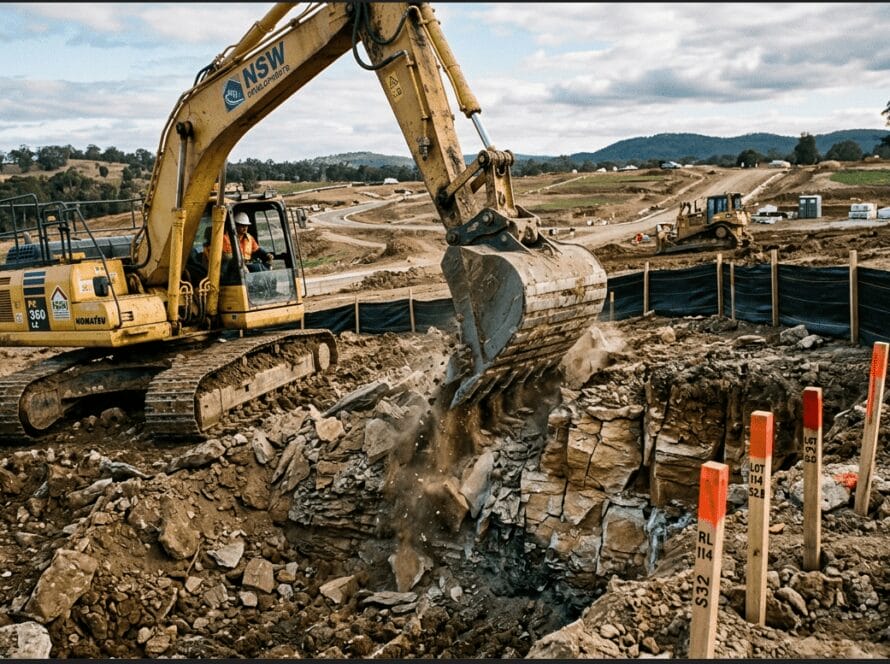
You need a Subdivision Works Certificate in NSW whenever your development consent requires physical civil works before the lots can be registered. Typical triggers include:
- New roads, kerbs, or footpaths
- Stormwater drainage infrastructure
- Sewerage and water main extensions
- Earthworks and retaining walls
- Public domain or landscaping works required by consent
- Utility service lead-ins required by council or service providers
If your DA conditions say “subdivision works are to be carried out in accordance with approved plans” or “Prior to Subdivision Works Certificate”, you almost certainly need an SWC.
What an SWC certifies
A Subdivision Certifier reviews the civil engineering design and confirms it meets the conditions of consent, the relevant Australian Standards, Council specifications, and any utility provider requirements. The NSW Planning Portal confirms that subdivision work means any physical activity authorised under a development consent for the subdivision of land.
Without an SWC, starting civil works is unlawful. Council can issue a stop-work order, and unauthorised work may need to be removed or redone at your cost.
What is a Subdivision Certificate?
A Subdivision Certificate is the final approval that unlocks registration of the plan of subdivision with NSW Land Registry Services. It is issued after civil works are complete and all consent conditions have been met. Without it, the new lots do not legally exist, and you cannot sell or transfer them.
When a Subdivision Certificate applies
Every subdivision that creates new titles needs one. That includes two-lot Torrens subdivisions, multi-stage greenfield releases, boundary adjustments, and community title schemes. The NSW Planning Portal confirms that before a Subdivision Certificate is issued, the matters in Section 6.15 of the EP&A Act must be addressed.
What a Subdivision Certificate authorises
A Subdivision Certificate authorises the plan of subdivision to be registered under Part 23 of the Conveyancing Act 1919. Once registered with NSW Land Registry Services, each new lot receives its own title. That is the moment the subdivision becomes legally real.
Our subdivision certificate service manages this final step, including sign-off on Consent conditions, Section 73 compliance, and coordination with the surveyor and Council.
SWC vs Subdivision Certificate: side-by-side
| SWC | Subdivision Certificate | |
|---|---|---|
| Purpose | Approve civil works to start | Approve plan registration |
| Timing | Before works begin | After works complete |
| Legal basis | Part 6, EP&A Act 1979 | Section 6.15, EP&A Act 1979 |
| Who issues | Registered Certifier or Council | Registered Certifier (CDC & SSD) or Council (DA) |
| What it unlocks | Legal right to build infrastructure | Legal creation of new lots |
Note: For Council DA approvals, under Section 6.5(3) of the EP&A Act, Council acts as Principal Certifier for DA subdivision works. A Registered Subdivision Certifier can issue the SWC, but to undertake inspections and issue a Compliance Certificate the PC must permit this, and the Subdivision Certificate sits with Council. However, for Complying Development and State Significant Development a Registered Subdivision Certifier can be appointed the Principal Certifier for subdivision, and issue the SWC, Compliance Certificate, and the Subdivision Certificate.
When do you need both, one, or neither?
The short answer: it depends on the approval pathway and whether civil works are involved.
Two-lot duplex or dual occupancy via CDC
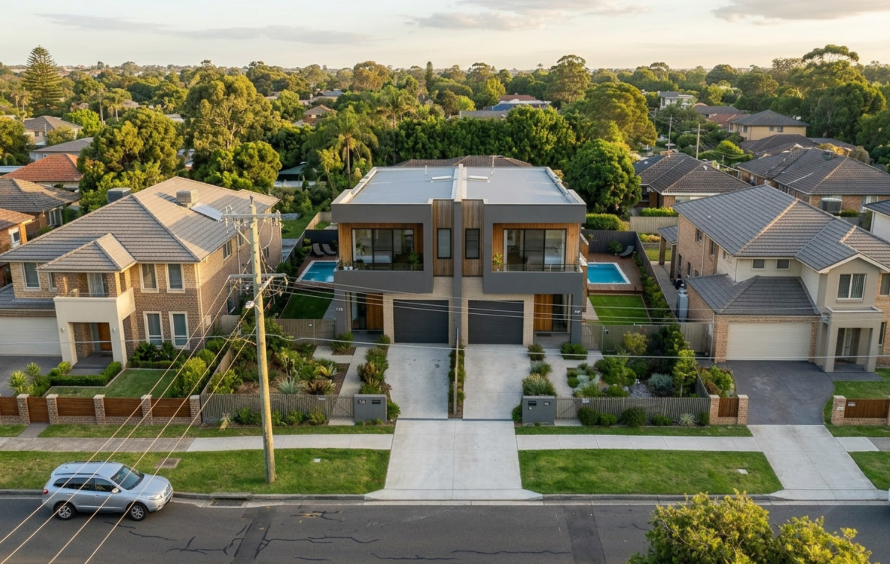
If your duplex is approved under a CDC subdivision pathway, you usually do not need an SWC. Most CDC duplexes are built on existing serviced lots, so no new civil infrastructure is required. You only need a Subdivision Certificate at the end to create the two titles.
DA subdivision with civil works
A DA-approved subdivision that involves roads, drainage, or utility work needs both. The SWC approves the civil design before works start. The Subdivision Certificate confirms everything is complete at the end and lets the plan register.
Strata subdivision of a completed building
Strata subdivisions of existing apartment buildings, townhouses, or duplexes usually do not require an SWC, and a Subdivision Certificate is not required either. In rare cases, where the consent conditions require new civil works as part of the strata scheme, an SWC may still apply. What you need instead is a Strata Certificate, which is a separate certificate issued under the Strata Schemes Development Act 2015. As a Registered Strata Certifier, Southwell Certifiers can issue your Strata Certificate for DA approvals.
Simple boundary adjustment
A boundary adjustment with no civil works needs only a Subdivision Certificate. No SWC is required.
What happens if you skip the wrong certificate
Missing either certificate has real consequences.
Starting civil works without an SWC is unlawful construction. Council can issue a stop-work order, require remediation, or refuse to accept the works when you later apply for the Subdivision Certificate. Insurance cover and lender drawdowns can also be affected, because unapproved work is effectively uninsured work.
Lodging a plan of subdivision without a Subdivision Certificate is worse. NSW Land Registry Services will refuse registration. That means no new titles, no settlement with buyers, and no release of security by your lender. On a multi-lot project, that delay can cost tens of thousands in holding costs per month.
The simplest safeguard is to line up both certificates at the start of the project, not at the end.
How to get an SWC in NSW
The process is simple.
- Appoint a Registered Subdivision Certifier under the Building and Development Certifiers Act 2018.
- Submit the application with plans, specifications, consent conditions, and fees.
- The Certifier reviews against consent, Australian Standards, and Council requirements.
- Certificate is issued once all matters are satisfied.
At Southwell Certifiers, we have issued Subdivision Works Certificates across 35-plus NSW councils, from two-lot infills to 200-plus lot staged releases. We respond to new enquiries within 1 to 2 business days so projects are not held up by slow Certifier turnaround.
FAQ Section
Is an SWC the same as a Construction Certificate?
No. A Construction Certificate covers building works. An SWC covers civil subdivision works such as roads, drainage, and earthworks. They are separate certificates issued under different parts of the EP&A Act, and a project can need both if it involves buildings and civil works.
Do I need an SWC for a two-lot Torrens subdivision?
Only if the development consent requires civil works such as new drainage, service connections, or road works. A simple two-lot subdivision on a fully serviced lot often needs no SWC, just a Subdivision Certificate at the end.
Can the same certifier issue both the SWC and the Subdivision Certificate?
It is a little tricky. A Registered Subdivision Certifier can issue both on the same project for State Significant Developments. But for DA-approved subdivisions, Council will always issue the Subdivision Certificate.
How long does each certificate take to issue?
Once all documents are lodged, an SWC can typically be issued within 1 to 2 business days. However, obtaining all the documents may take two to four weeks, depending on your consultants. A Subdivision Certificate can move faster if all conditions are closed out cleanly. Timing depends on the completeness of the application and how quickly supporting documentation is received.
Do duplexes need an SWC in NSW?
Usually not. Most NSW duplexes are built on existing serviced lots under a CDC pathway, so no new civil infrastructure is required. A Subdivision Certificate is almost always needed at the end to register the two new lots on title.
Conclusion
The difference between an SWC and a Subdivision Certificate comes down to timing and purpose. The SWC clears the way for civil works at the start. The Subdivision Certificate closes out the project and creates the new titles at the end. Some projects need both, many need only one, and strata schemes usually need neither.
Getting this wrong costs time and money. Getting it right means appointing a Registered Subdivision Certifier early, so the right certificate is in place at the right stage.
If you are planning a subdivision in NSW and want clear advice on the certification pathway, Southwell Certifiers can help. To discuss your project and receive a no-obligation fee proposal, contact us on (02) 8734 5676, email admin@southwellcert.com.au, or request a fee proposal.