
Most subdivision delays do not come from the big-ticket items. They come from consent conditions that get overlooked early and become serious problems at Subdivision Certificate stage.
One of the most common is the Section 68 approval under the Local Government Act 1993. It applies when stormwater or drainage works extend beyond the property listed on your DA consent, and it can only be issued by Council. Not your certifier. Not your engineer. Council.
Working countless Subdivision Works Certificate projects spanning 35+ Councils in NSW, this is one of the most frequent causes of delay I see. The approval gets missed, works start without it, and then the project team is left trying to retroactively comply while the Subdivision Certificate sits on hold.
This article walks through what Section 68 means in a DA subdivision, how it connects to other approvals you may need, and why the whole process starts with one document: your Notice of Determination.
Start With Your Notice of Determination
Before you think about Section 68, Roads Act approvals, or any other condition, you need to properly read your Notice of Determination. This is the legal document that sets out what Council has approved, the conditions attached to that approval, and the dates that govern your consent.
It is transferable with the sale of a property. Everything that follows in the subdivision process flows from what is written in this document. If you do not read it carefully at the start, you will find out the hard way later.
Here are the key items to check on the first page.
Development Description: Check What Was Actually Approved
The development description details exactly what has been approved. It is supported by the stamped approved plans.
This matters because if details of your development are missing from the description, you may not have approval for those elements. For example, if the number of lots being created is wrong, or if the word “subdivision” is missing entirely, you may have a problem that needs to be resolved before you proceed.
Do not assume the plans alone are enough. The development description and the approved plans work together. If they do not align, raise it early.
Property Address: The Detail That Triggers Additional Approvals
This is one of the most important fields on your Notice of Determination. If any works need to happen on any property outside the address listed here, you will need additional approvals for those works, even if those works are shown on the stamped approved plans.
There are three common scenarios where this creates issues in a DA subdivision:
Your site contains multiple lots and one is missed. If your development site includes more than one lot and not all lots are listed on the consent, you will need to get your determination amended to include the missing lots before you proceed.
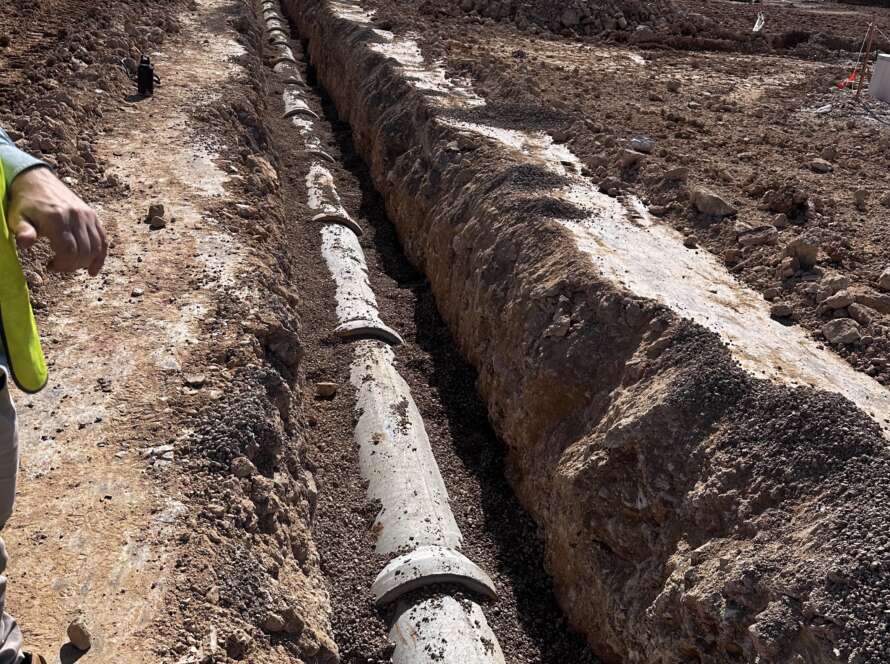
Stormwater works go through an adjoining property. If your drainage needs to run through a neighbouring property (for example, through a drainage easement to connect to the council stormwater system), those works fall outside the DA property address. You are subject to a Section 68 approval under the Local Government Act 1993.
Works within the road reserve or public domain. If your subdivision involves a kerb outlet, driveway crossover, connection to public drainage, or roadworks, those works sit within the road reserve. You are subject to a Section 138 Roads Act approval.
These approvals are only issued by Council. Address them early to avoid delays.
Key Dates on Your Consent
There are several dates on the Notice of Determination that govern the life of your consent.
Date of determination. This is the date council made its decision on whether to approve or refuse the application. It is not necessarily the date the consent becomes active.
Date from which consent operates. This is the date your consent is live. If you have a deferred commencement consent, you typically have one year to fulfil the deferred condition or conditions. Once you comply, council will issue a Consent Activation Letter confirming the date the consent operates from.
Date consent lapses. Under Section 4.53 of the EP&A Act 1979, a development consent generally lapses five years after the date from which it operates, unless work has physically commenced. A modification to the consent does not extend the lapse date.
If your consent is close to lapsing and you have not started subdivision works, this needs to be addressed urgently. A lapsed consent means starting the DA process again.
What Is a Section 68 Approval in a DA Subdivision?
Section 68 of the Local Government Act 1993 sets out a range of activities that require separate approval from council. These sit outside the DA approval process and are additional to your development consent.
In the context of a DA subdivision, the most relevant activities under Section 68 are water supply, sewerage, and stormwater drainage works.
How Section 68 Applies to Stormwater and Drainage Works
Section 68 approval is typically required when the person who benefits from the consent needs to carry out works on a property that is not listed on the DA approval.
The most common scenario in subdivision is stormwater. Your site’s internal drainage system may need to connect to a Council drainage system, and that connection may involve running stormwater lines through an adjoining property to reach the council network. This often occurs through a drainage easement.
Even though these works are shown on the stamped approved plans and form part of the overall drainage design, the fact that they occur on a property outside the DA address means the approval pathway required is through a Section 68.
When Do You Need a Section 68 Approval?
You will typically need a Section 68 approval when your DA consent conditions require it prior to the issue of a Subdivision Works Certificate. Common triggers include stormwater connections to Council systems and that cross property boundaries, any drainage works own Council systems, drainage works through easements on adjoining land, and sewer or water connections that extend beyond the development site.
Your consent conditions will usually state this clearly. Look for references to “Section 68 of the Local Government Act” in the conditions that apply prior to the issue of a Subdivision Works Certificate.
Who Issues the Section 68 Approval, Inspections, and Compliance?
Council. Always Council.
A Registered Subdivision Certifier cannot issue a Section 68 approval, carry out inspections under Section 68, or issue compliance for Section 68 works. This sits entirely within Council’s jurisdiction under the Local Government Act.
Council will assess the application, conduct inspections during construction, and issue compliance documentation once the works are complete and satisfactory.
Do I Need a Section 68 Approval for Stormwater Through an Adjoining Property?
Yes. If your stormwater drainage needs to pass through a property that is not listed on your DA consent, whether through an existing drainage easement or a new one being created, you need a Section 68 approval from Council before you start those works.
This applies even if the drainage design is shown on your approved plans and even if the easement is already registered or will be created as part of the subdivision. The approved plans give you the design. The Section 68 gives you the legal approval to physically carry out the works on that other property.
The approval process involves lodging an application with Council, providing the relevant engineering drawings and drainage design, and having Council assess whether the proposed works are acceptable. Council will then inspect the works during construction and issue compliance on completion.
Do I Need a Section 68 Approval for Stormwater Through an Adjoining Property?
Yes. If your stormwater drainage needs to pass through a property that is not listed on your DA consent, whether through an existing drainage easement or a new one being created, you need a Section 68 approval from Council before you start those works.
This applies even if the drainage design is shown on your approved plans and even if the easement is already registered or will be created as part of the subdivision. The approved plans give you the design. The Section 68 gives you the legal approval to physically carry out the works on that other property.
The approval process involves lodging an application with Council, providing the relevant engineering drawings and drainage design, and having Council assess whether the proposed works are acceptable. Council will then inspect the works during construction and issue compliance on completion.
Roads Act Approval: The Other Approval People Miss
Section 68 is not the only separate approval that catches project teams off guard. Section 138 of the Roads Act 1993 covers any works or structures within the road reserve or public domain.
What Is a Section 138 Roads Act Approval?
Under Section 138 of the Roads Act, you need consent from the relevant roads authority before carrying out works on a public road. For most subdivision projects, the relevant authority is the local Council.
Kerb Outlets, Driveway Crossovers, and Public Domain Works
In a DA subdivision, Roads Act approval commonly applies to new driveway crossovers, kerb and gutter works, stormwater kerb outlets, connections to public drainage within the road reserve, and any road restoration or construction within council’s road reserve.
Like the Section 68 approval, this is a Council-only approval. Your Certifier cannot issue it. It needs to be lodged, assessed, and approved by Council before those works commence.
If your consent conditions reference Section 138, Roads Act, or works in the road reserve, treat it the same way as the Section 68: apply early and do not start works until the approval is in hand.
Can a Subdivision Certifier Issue a Section 68 or Roads Act Approval?
No. A Subdivision Certifier cannot issue a Section 68 approval under the Local Government Act or a Section 138 approval under the Roads Act. These approvals sit with council.
What a Subdivision Certifier can do is help you identify these conditions early, explain what they mean, and make sure you understand the full list of pre-commencement and pre-Subdivision Works Certificate requirements on your consent. That clarity at the start is what prevents delays at the end.
How to Avoid Delays on Your DA Subdivision
The simplest way to avoid delays from Section 68, Roads Act, or any other consent condition is to get on top of your requirements early. Here is what that looks like in practice.
Engage a Subdivision Certifier once your DA has been approved. A good certifier will review your consent conditions and give you a complete list of what needs to happen before a Subdivision Works Certificate can be issued. This includes identifying any Section 68, Roads Act, or other council-only approvals that sit outside the certification pathway. Getting this list early means no surprises later.
Do not ignore or try to work around consent conditions. Every condition on your consent exists for a reason, and skipping one will catch up with you at Subdivision Certificate stage. That said, there are circumstances where a particular condition, including a Section 68, may not apply to your specific project or may be addressed through an alternative pathway. Your subdivision certifier will advise you on this. The key point is: do not make that call yourself without professional advice.
Lodge council-only applications early. Section 68 and Roads Act applications go through Council’s assessment process, which runs on Council’s timeline, not yours. If you wait until you are ready to start works before lodging, you will lose weeks or months to Council processing times.
Read your Notice of Determination thoroughly. Check the development description, property address, and dates. Confirm that what is described matches what you are building. Confirm that all properties involved in the works are covered. If something does not align, get it sorted before works commence.
Factor in post-construction requirements. WAE drawings, hydraulic testing, and CCTV inspections for stormwater lines all take time. Build these into your program from the start, not as an afterthought when you are trying to lodge your Subdivision Certificate application.
Section 68 and Section 138 Roads Act approvals are two of the most commonly overlooked conditions on a DA subdivision consent. They are not complicated, but they are non-negotiable. Council is the only authority that can issue them, inspect the works, and confirm compliance.
The earlier you identify these requirements, the less likely they are to cause problems. Read your Notice of Determination carefully, engage a Subdivision Certifier early to map out the full list of pre-SWC conditions, and lodge your council applications with enough lead time.
If you are planning a DA subdivision in NSW and want clear advice on the certification pathway, Southwell Certifiers can help. To discuss your project and receive a no-obligation fee proposal, contact us on (02) 8734 5676, email admin@southwellcert.com.au, or request a fee proposal.