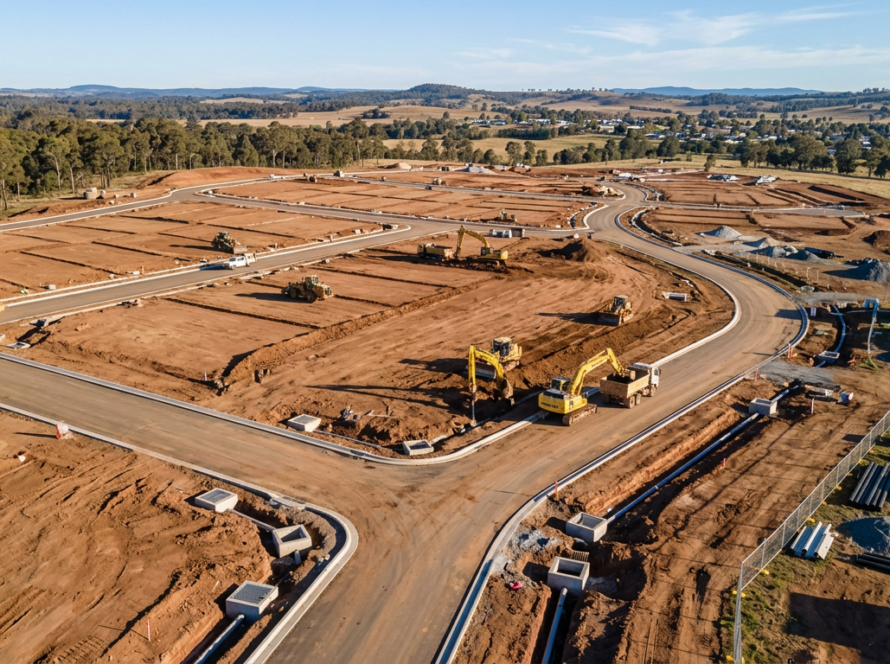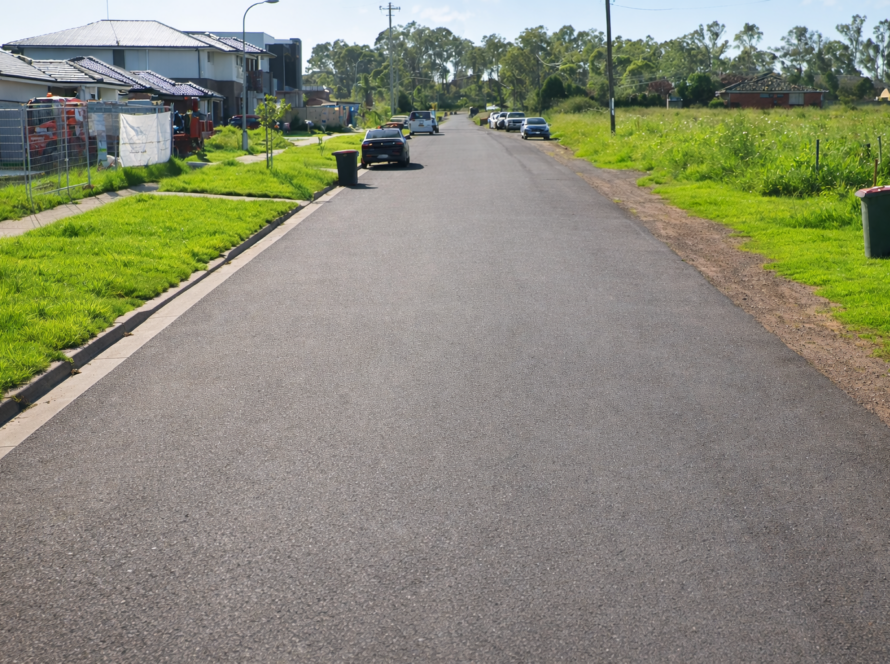

You have the consent. The civil contractor is priced and ready to mobilise. Then someone reads the conditions properly: a construction certificate is required before any engineering works commence.
There is one problem. No certifier in NSW has the power to issue it. Not even council.
A manufactured home estate involves no subdivision, so no subdivision works certificate can ever exist for its internal roads, drainage and earthworks. Consents default to requiring a construction certificate instead, and nobody can issue one of those over civil works either. Not a certifier, and not council. A pathway exists, but it is not the one written into most consents.
If you are delivering a manufactured home estate or land lease community anywhere in NSW, this article explains why your project keeps hitting the same wall, and why the answer is not the certificate your consent asks for.
Land lease is booming. The certification framework has not caught up
Land lease communities are one of the fastest growing residential sectors in the country. CBRE’s sector research puts the national stock at more than 40,000 operational sites, with another 15,000 to 20,000 in the development pipeline and institutional capital moving in at scale. NSW is carrying a large share of that pipeline.
The planning side has kept pace. The provisions that once sat in SEPP 36 now live in the Housing SEPP 2021, which gives manufactured home estates a clear approval framework and has helped drive the boom.
The certification side has not. Part 6 of the EP&A Act was rebuilt in 2019 around two categories of work: building work and subdivision work. Every certificate in the system attaches to one or the other. MHE civil works are neither. That mismatch between the SEPP that approves these estates and the Act that certifies construction is where nearly every project stalls.
A manufactured home estate involves no subdivision. That rules out the SWC
On a conventional estate, the instrument that covers roads, drainage and earthworks is a subdivision works certificate. NSW Planning’s own guidance on subdivision works certificates is clear that an SWC can only be issued for subdivision work.
A manufactured home estate has none. The land stays in one title. Residents own their homes and lease their sites. Nothing is divided, so there is no subdivision work for an SWC to attach to, and no subdivision certificate at the end of the job either.
Where an MHE involves plan work at all, it is usually a lot consolidation, several parcels folded into one to hold the estate. Section 6.2 of the EP&A Act defines subdivision as the division of land, and section 6.2(3)(e) expressly excludes the registration of a plan of consolidation. Consolidation is the opposite of subdivision, and the Act treats it that way.
So the certificate that covers civil works everywhere else in NSW is off the table before the consent is even drafted.
Consents default to a construction certificate. Nobody can issue one
With the subdivision pathway closed, consent drafting falls back on the other familiar instrument. Consents for manufactured home estates routinely carry a standard condition requiring a construction certificate prior to commencement of engineering works.
Section 6.4 of the EP&A Act sets out the certificates that exist under Part 6. It is a closed list, and a construction certificate can only be issued for building work. Internal roads are not buildings. Stormwater drainage is not a building. Bulk earthworks are not a building.
This is not a private certifier limitation. Council certifiers work under exactly the same statute, so a construction certificate over an MHE civil package has no lawful subject matter no matter who signs it. The condition demands a certificate that cannot exist.
Nor is it a technicality that a cooperative certifier can work around. Anyone who issues a certificate outside the statutory power has issued nothing. The document would not protect the developer, the contractor or the financier relying on it.
How the stall plays out on a manufactured home estate
The condition is not malicious. It comes from templates written for conventional residential development, where a construction certificate is exactly the right instrument. Carried across to a manufactured home estate consent, it creates an obligation nobody can meet.
The consequences land fast. The developer cannot comply with the condition as written. The civil contractor will not mobilise without certification sitting behind the works. The financier asks where the certification is before releasing drawdowns. And the program stalls while lawyers, planners and engineers argue about an instrument that legally cannot exist.
I have watched capable, experienced project teams lose months at exactly this point. Not because anyone did anything wrong, but because the consent asks for something the law cannot deliver, and nobody in the room has seen the problem before.
There is a lawful pathway through Part 6
The gap is real, but it is not a dead end. Part 6 of the EP&A Act contains mechanisms that can lawfully cover both the design and the construction of MHE civil works. Used correctly, they give the developer, the contractor and the financier the independent certification the project needs, and they resolve the pre-commencement condition rather than ignoring it.
Two warnings. First, every consent is drafted differently, so every solution is structured differently. What resolved the last estate will not simply transplant onto the next one. Second, the pathway has to be set up properly and locked in before the works are programmed. Teams that start civil works while the certification question is still open are building unauthorised works, drawing down finance with nothing behind it, and setting up a dispute at completion that can hold the whole estate hostage.
I have assessed and certified civil infrastructure on manufactured housing estates across NSW ranging from around 100 sites to over 300 sites, and the same consent drafting problems appear on nearly every one. The civil works certification pathway exists. It just has to be mapped to your consent, your works package and your program, and locked in before the first machine arrives on site.
FAQ
Do I need a construction certificate for civil works on a manufactured home estate in NSW?
Your consent may say you do, but a construction certificate can only be issued for building work under the EP&A Act, and internal roads, drainage and earthworks are not building work. No certifier can issue one over this work, and neither can council. The certification question needs to be resolved through the correct Part 6 mechanism before works are programmed.
Is a land lease community a subdivision in NSW?
No. The land remains in a single title and residents lease their individual sites. Where plan work occurs it is usually a lot consolidation, which section 6.2(3)(e) of the EP&A Act expressly excludes from the definition of subdivision. Because there is no subdivision, no subdivision works certificate or subdivision certificate can be issued.
Why does my MHE consent require a certificate nobody can issue?
Because the condition was carried across from templates written for conventional residential development. On a housing subdivision, a construction certificate or subdivision works certificate is the right instrument. On a manufactured home estate, neither can lawfully exist, so the standard wording creates a condition that cannot be met as drafted.
Who can certify roads and drainage on a land lease community in NSW?
A registered certifier with the right registration categories and civil engineering capability, acting under the correct Part 6 mechanism for your consent. The structure differs from project to project, which is why it should be confirmed in writing before the civil contract is let. Southwell Certifiers is registered to certify subdivision, roads, drainage and stormwater across NSW.
Conclusion
Manufactured home estates and land lease communities sit in a certification gap. No subdivision means no subdivision works certificate. Consents default to a construction certificate instead, and nobody can issue one over civil works. Not a certifier, and not council. A lawful pathway through Part 6 of the EP&A Act exists, but it has to be structured for your specific consent and locked in before the works are programmed, not argued about after the contractor has mobilised.
If your consent has construction certificate conditions sitting over your civil works, resolve the pathway before you program the works, and Southwell Certifiers can map it for you. Registered certifier for subdivision, roads, drainage and stormwater across NSW. Call (02) 8734 5676, email admin@southwellcert.com.au, or request a fee proposal. You can also reach us through the contact page.